Hotel Spa & Wellness Furniture: From Treatment Room to Relaxation Lounge
Hotel spas are no longer an amenity. They are a revenue line — and the numbers make that case clearly.
The global hotel and resort spa segment generated $27.8 billion in revenue in 2025, representing the largest share (30.3%) of the entire spa services market.1 More directly relevant to hotel operators: properties with major wellness offerings generate 108% higher Total Revenue per Available Room (TRevPAR) compared to hotels with no wellness facilities, according to RLA Global’s 2025 Wellness Real Estate Report.2 In that same study, wellness hotels reported a 49% profit conversion rate in their leisure departments — outperforming non-wellness properties across virtually every financial metric.
That performance gap is not created by treatment menus alone. The physical environment — and specifically the furniture in each spa zone — is what converts a single visit into a guest experience that drives return bookings, ancillary spend, and online review scores.
This guide covers each zone of a hotel spa, the furniture specifications required to perform in each, and the cross-zone design decisions that determine whether a spa feels designed or assembled.
Zone 1 — Reception and Waiting Area: Does the First Impression Match the Promise?
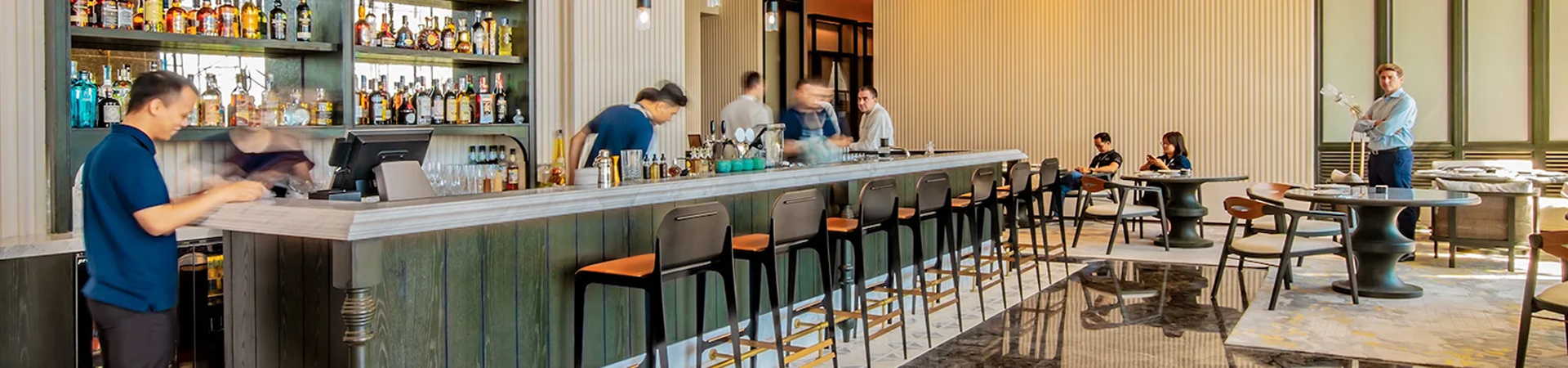
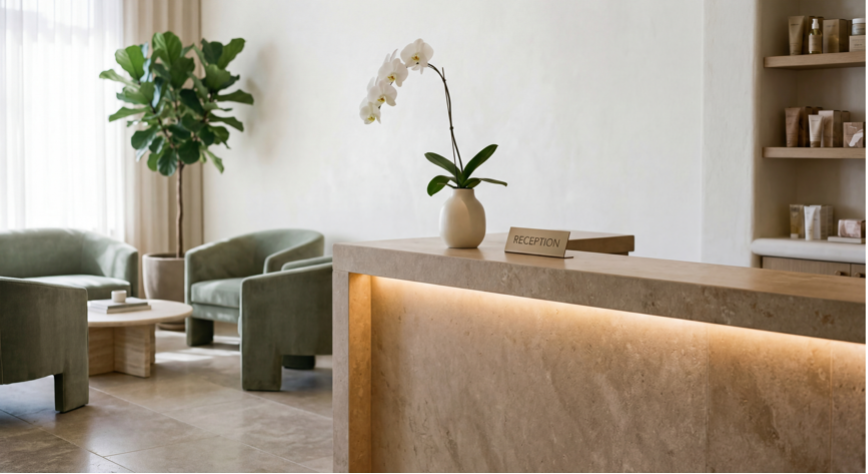
The reception area sets the emotional register before a treatment begins. Furniture here must communicate calm — which is different from communicating luxury.
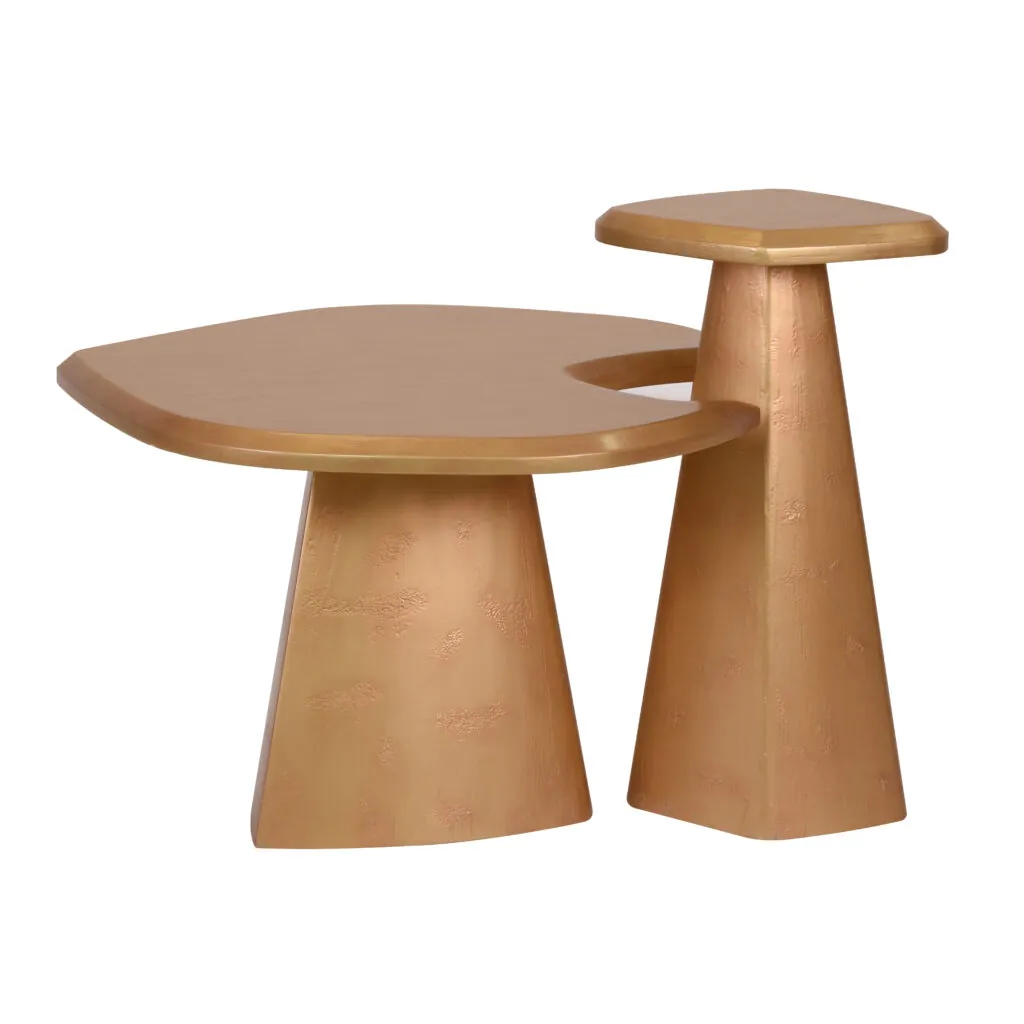
Practically: a reception desk built from natural materials (stone-faced panels, solid wood countertops, matte finish hardware) rather than high-gloss laminates. Lounge seating should be lower and softer than standard lobby chairs — guests are transitioning out of the outside world, not arriving at a check-in desk. Side tables positioned for tea service are a functional detail that matters more than most decorative decisions in this zone.
Upholstery specification: contract-grade fabric with water resistance, antibacterial treatment, and stain resistance. The color palette should be drawn from soft neutrals and muted earth tones. High-saturation colors work against the decompression function of the space and should be avoided regardless of broader hotel brand palette. Gainwell produces custom reception desks and waiting area furniture with stone and solid wood integration, matched to the contract-grade fabric requirements that spa environments demand.
Zone 2 — Treatment Rooms: Where in This Zone Does the Furniture Manufacturer Add Value?
Treatment tables and massage beds sit outside the scope of most FF&E (furniture, fixtures, and equipment) manufacturers. The surrounding casework is where specification decisions directly shape therapist workflow and guest experience.
The most critical pieces in a treatment room are built-in cabinetry: vanity stations, towel storage, product display shelving, and the therapist’s equipment trolley. These must satisfy four requirements simultaneously:
- Moisture-resistant substrate and surface finish — standard particleboard will fail within 12 to 18 months in high-humidity spa environments
- Soft-close hardware — noise control is part of the treatment environment; slamming drawers break the experience
- Low-VOC (volatile organic compound) finishes — treatment rooms have limited ventilation; off-gassing from standard finishes creates air quality problems
- Easy-clean surfaces — commercial-grade cleaning agents are used daily; finishes must hold up without deterioration
An additional consideration: solid wood cabinetry absorbs ambient sound better than hollow-panel construction. In a space where quiet is part of the service offering, that acoustic difference is functional, not cosmetic. Gainwell’s built-in millwork program for treatment rooms covers moisture-resistant casegoods, vanity units, and product display shelving — all finished with low-VOC systems and soft-close hardware as standard.
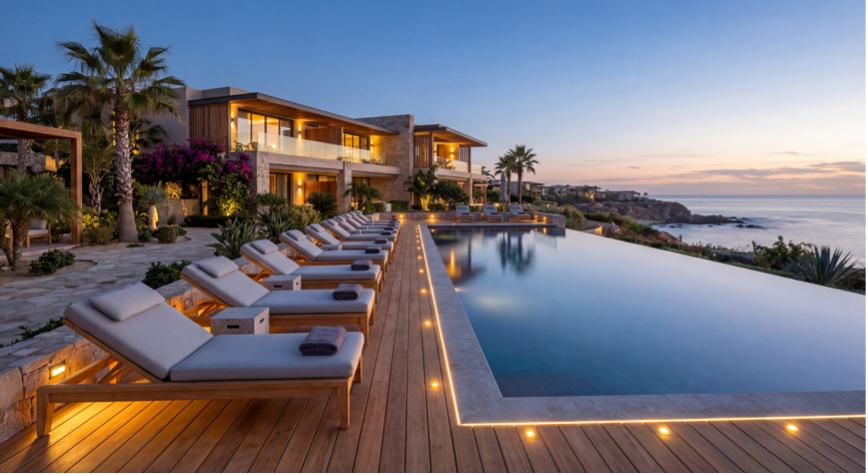
Zone 3 — Relaxation Lounge: Which Furniture Keeps Guests Longest?
The relaxation lounge carries the most weight in the guest’s overall spa impression. It is where guests wait before treatment and decompress after — the zone with the longest dwell time and, accordingly, the most demanding furniture specification.
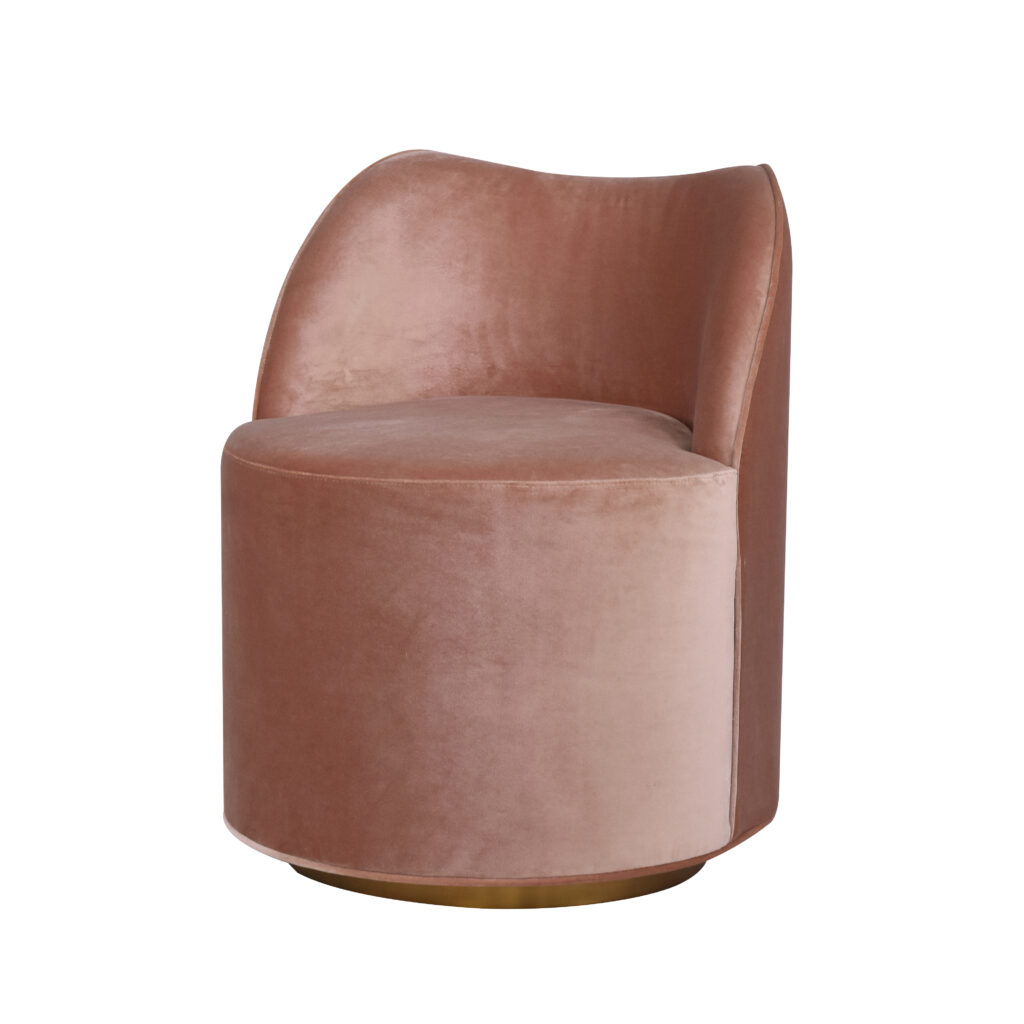
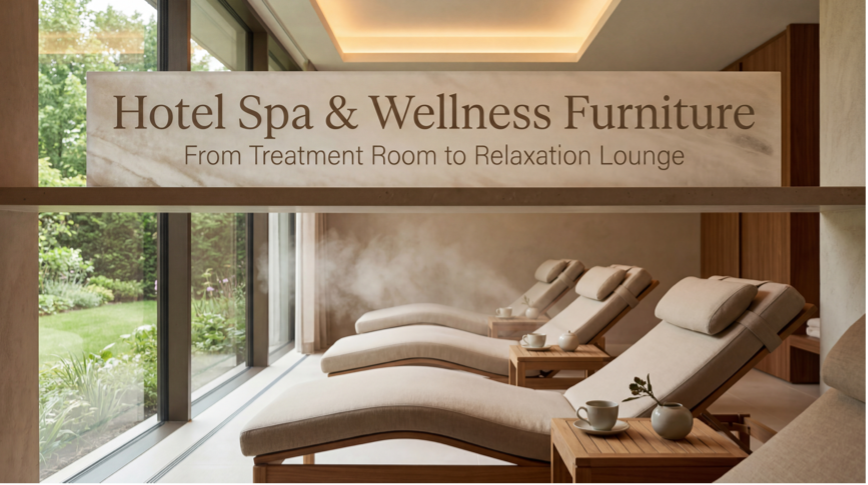
In 2026, the specification direction in hotel lounge furniture for spa relaxation zones moves toward immersive forms: zero-gravity recliners, cocoon-style alcove seating with integrated sound-dampening panels, and heated loungers for post-treatment recovery. These formats are no longer exclusive to destination spas. They are appearing in urban four-star hotel spas where competition for return visits is sharpest.
Wellness travelers spend 59% more per trip than non-wellness travelers,3 and 90% of wellness travelers now build spa sessions into their itineraries when selecting a property.4 The relaxation lounge is the space most likely to determine whether that guest books the spa on their next stay — or books elsewhere.
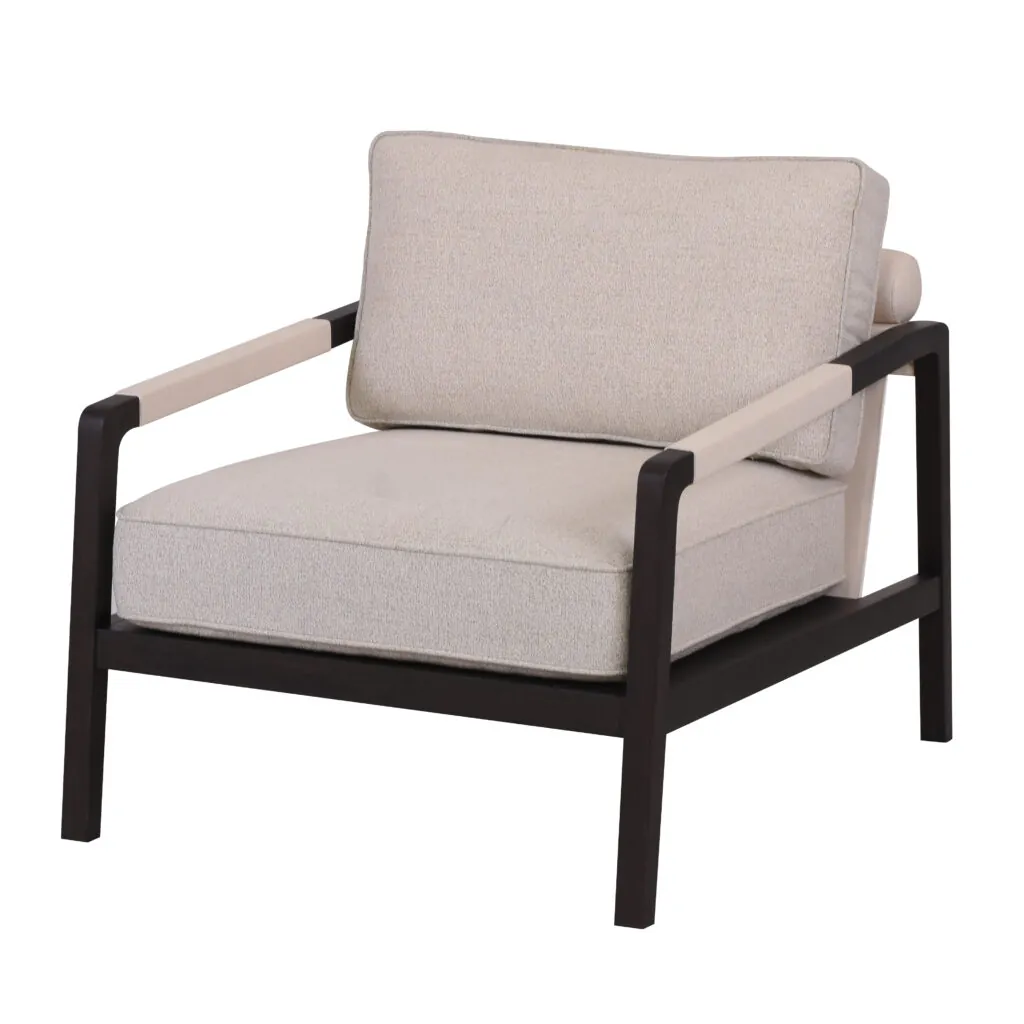
Fabric specifications in this zone are the most demanding in the spa. Upholstery must handle humidity, body oils, and repeated professional cleaning — which rules out most residential-grade materials. Marine-grade or high-performance contract fabrics with a minimum 50,000 Martindale rub count are the correct baseline. Frame construction should be rust-resistant if the lounge connects to or is adjacent to a wet area. Gainwell produces custom lounge furniture — including upholstered chaise lounges and alcove seating — in marine-grade and high-performance contract fabrics, applying the same material engineering used in its cruise ship and yacht interior programs to hotel spa environments.
Zone 4 — Wet Areas, Pool Deck, and Sauna: What Materials Actually Survive?
Wet area furniture operates in the most demanding environmental conditions in any hotel: sustained heat, high humidity, direct water contact, chlorine exposure from pool-adjacent use, and daily sunscreen residue.
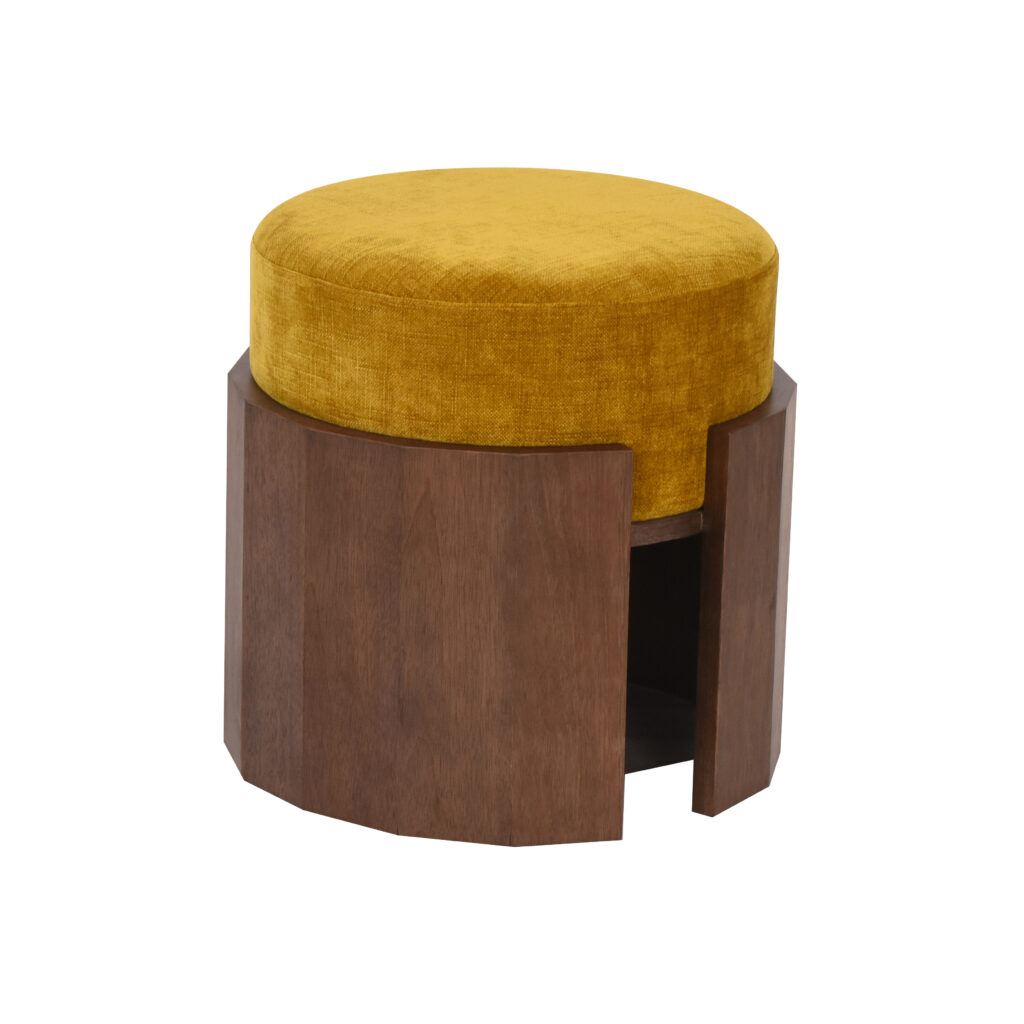
Teak is the established benchmark for wet area furniture. Its natural oil content resists moisture absorption and the resulting warping, cracking, and mold growth that affects most wood species in high-humidity conditions. Teak benches and stools in sauna and steam rooms, teak poolside loungers with quick-dry outdoor cushions, and outdoor side tables in teak or powder-coated marine-grade aluminum are the standard specification for these zones.
Hotel pool lounge furniture requires two additional criteria that are often under-specified at the procurement stage: UV-resistant finish systems that maintain color integrity across a three-to-five year outdoor exposure cycle, and stackable design that allows housekeeping to clear and maintain pool deck surfaces efficiently. Non-stackable pool loungers create compounding operational problems that become significant within the first year of operation. Gainwell manufactures teak furniture and outdoor-rated pieces across its marine furniture program — the same material standards that apply to cruise deck and yacht exterior environments translate directly to hotel pool deck and wet spa area specifications.
Zone 5 — Changing and Locker Rooms: Is This Zone Systematically Under-Specified?
In most hotel spa projects: yes.
The changing room is the last physical space a guest occupies before exiting the spa. A poorly executed changing room produces negative reviews that reference the entire spa visit — not just the locker area. A well-executed one reinforces the impression built across all the earlier zones.
The furniture specification here should include: vanity counters with integrated mirror lighting (not overhead fluorescent fixtures, which are unflattering and lower perceived value), upholstered seating benches with water-resistant fabric, and grooming stations with dedicated surface space and integrated power access for hair tools. All materials must meet anti-fungal standards and withstand daily deep-cleaning. Gainwell’s custom vanity and millwork program covers this zone directly — integrated vanity units with stone or solid surface countertops, upholstered benches, and anti-fungal material specifications built into the production standard.
Design Decisions That Apply Across All Zones
Material consistency is the most commonly missed specification requirement in spa projects. A unified material palette — the same wood species and finish tone running from the reception desk through the treatment room cabinetry to the relaxation lounge millwork — creates coherence that reads as designed. When that thread breaks (different wood tones between zones, inconsistent hardware finishes, mismatched stone profiles), guests register a sense of incompleteness, even when they cannot identify the specific cause. Gainwell’s single-source manufacturing capability across all five spa zones — from reception millwork to wet area teak — makes it possible to maintain that material thread without coordinating between multiple suppliers.
Guest flow design affects furniture layout directly. A one-way journey from reception → changing room → treatment → relaxation lounge → exit, separated from staff circulation routes, prevents the cross-traffic that degrades the therapeutic atmosphere. Furniture placement should reinforce that directional flow, not create ambiguity about where guests should go next.
Cleaning frequency should drive material selection, not appearance alone. Spa furniture is cleaned two to four times daily with commercial-grade products — significantly more aggressively than guestroom furniture. Specifying materials that cannot withstand that cleaning load produces replacement costs within 18 to 24 months of opening. The visible cost difference between a correct specification and an incorrect one disappears within the first replacement cycle.
The Specification Standard for Hotel Spa Furniture
Spa furniture is a specialized category. It sits at the intersection of hospitality aesthetics, wellness design principles, and commercial durability requirements — and it must satisfy all three simultaneously. Specifying on any one dimension alone produces failures in the other two.
The revenue case for getting this right is well established. Major wellness hotels achieved TRevPAR more than double that of no-wellness properties in 2024.2 The furniture environment is a direct contributor to that performance — not a secondary consideration.
Gainwell has supplied spa and wellness furniture to luxury hotel projects across the US, Middle East, and Asia-Pacific, including properties under brands such as Waldorf Astoria and Marriott. For hotel spa FF&E projects in planning or specification phases, contact Gainwell’s project team to review zone-by-zone requirements against your design brief, material palette, and operational parameters.
References
- “Spa Market Size, Share & Industry Forecast 2026–2035.” Global Market Insights, Dec. 2025, www.gminsights.com/industry-analysis/spa-market.
- Grove, Michael, and Roger A. Allen. “Wellness Real Estate Report 2025.” RLA Global / HotStats, 2025, www.hotstats.com/hotel-industry-resources/wellness-real-estate-report-2025.
- “Spa Market Size, Trends, Share, 2031 Report & Opportunities.” Mordor Intelligence, Jan. 2026, www.mordorintelligence.com/industry-reports/spa-market.
- “Spa Market Size, Trends, Share, 2031 Report & Opportunities.” Mordor Intelligence, Jan. 2026, www.mordorintelligence.com/industry-reports/spa-market.