
Hotel Bed Sizes Guide: How Dimensions Shape Your Entire Bedroom FF&E Layout
Bed size is the first decision in a hotel bedroom, and every other furniture choice keys off it. Once the bed is fixed, you have effectively set the room’s circulation, the headboard scale, the nightstand footprint, and how much wall is left for the wardrobe and desk. Get it wrong and the whole layout has to be re-solved late, when the drawings are already with the factory.
This guide works the way procurement does: start with the bed dimensions, then trace how they drive the rest of the package. Gainwell builds hotel beds and headboards to project specifications, and the patterns below reflect how those bedroom layouts actually get planned.
Standard Hotel Bed Sizes at a Glance
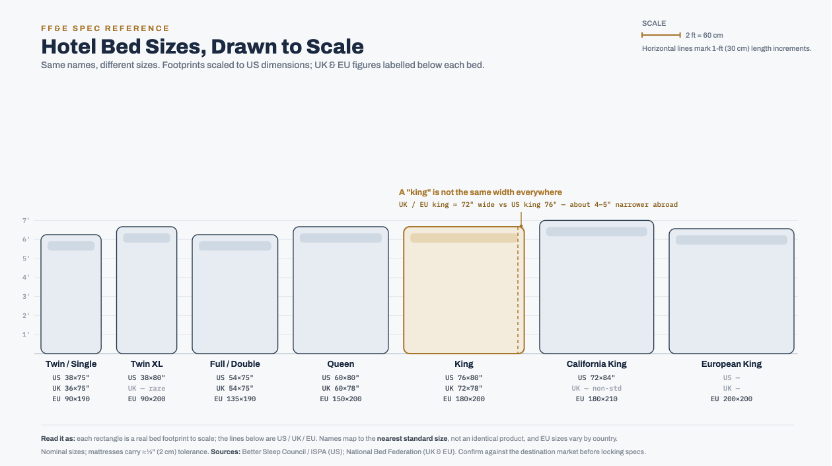
Hotel bed sizes split into three reference systems: US sizes in inches, UK sizes that share some of the names but not the dimensions, and European sizes in centimeters. On a cross-border project, this is the table worth keeping open while you spec.
| Bed Type | US (in) | UK (in) | EU (cm) | Typical Hotel Use |
|---|---|---|---|---|
| Twin / Single | 38 × 75 | 36 × 75 | 90 × 190 | Standard twin rooms, shared occupancy |
| Twin XL | 38 × 80 | Rare | 90 × 200 | Business and extended-stay; flexible twin/king conversions |
| Full / Double | 54 × 75 | 54 × 75 | 135 × 190 | Older properties, economy rooms |
| Queen | 60 × 80 | 60 × 78 | 150 × 200 | Most 3–4 star hotels worldwide |
| King | 76 × 80 | 72 × 78 | 180 × 200 | Upscale rooms and suites |
| California King | 72 × 84 | Not standard | 180 × 210 | Luxury suites, resort villas |
| European King | — | — | 200 × 200 | High-end European properties |
US figures are nominal sizes from the Better Sleep Council [1]; UK and European figures follow the National Bed Federation and European national standards [3]. Two cautions before you copy a number: each name maps to the nearest standard size in a market rather than an identical product, and European dimensions vary by country, so confirm against the destination market. Mattresses also carry a manufacturing tolerance of roughly half an inch, or about 2 cm.
When you size a room, plan from the bed outward. The real floor area a bed type demands is its mattress footprint plus the walking clearance on each access side, and that number climbs faster than the headline width suggests once you account for both sides and the foot of the bed.
The naming overlap is where cross-border projects trip. A UK king is far narrower than a US king, and a US queen has no exact European equivalent, so a spec that travels between markets on name alone quietly lands at the wrong size. The unit system compounds it. A property built to US king dimensions but dressed in European bedding, or the reverse, ends up with sheets and duvets that never sit right, and replacement linen becomes a recurring procurement headache for the life of the room.
There is no single Middle East bed standard. Gulf luxury properties typically specify either the US king or a European 180 to 200 cm size, often custom, so the dimension has to come from the brand standard or the FF&E drawings, not a generic chart.
What Bed Size Means for Room Layout
The bed footprint sets a room’s circulation before any other piece is placed. Minimum usable area scales with it: a king needs meaningfully more floor than a queen to keep the same walking clearance, which is exactly why tighter rooms get pushed back down to a queen.
For the accessible rooms every hotel is required to provide, the clearances are not a matter of taste. The 2010 ADA Standards for Accessible Design set hard minimums around the bed in accessible guestrooms [2].
- A 36-inch-wide accessible route to and around the bed
- Clear floor space of 30 by 48 inches positioned beside the bed
- A 60-inch turning circle for wheelchair maneuvering in the room
- A 32-inch clear width at guestroom and bathroom doors
Standard rooms are not bound by those figures, but they make a sensible floor. The single versus double-sided question is what most often decides the bed: a bed pushed against a wall needs clearance on one side only, while a freestanding king needs it on both, and that difference is frequently what tips a smaller room from a king back to a queen. Note too that the ADA sets no mattress-height requirement, which is why bed height that is too tall to transfer onto remains a recurring accessibility complaint [2].
The knock-on effects run further than the floor plan. A king that squeezes the walkway below a comfortable width feels tight to the guest, complicates housekeeping carts, slows room turnover, and in an accessible room can push the whole layout out of compliance.
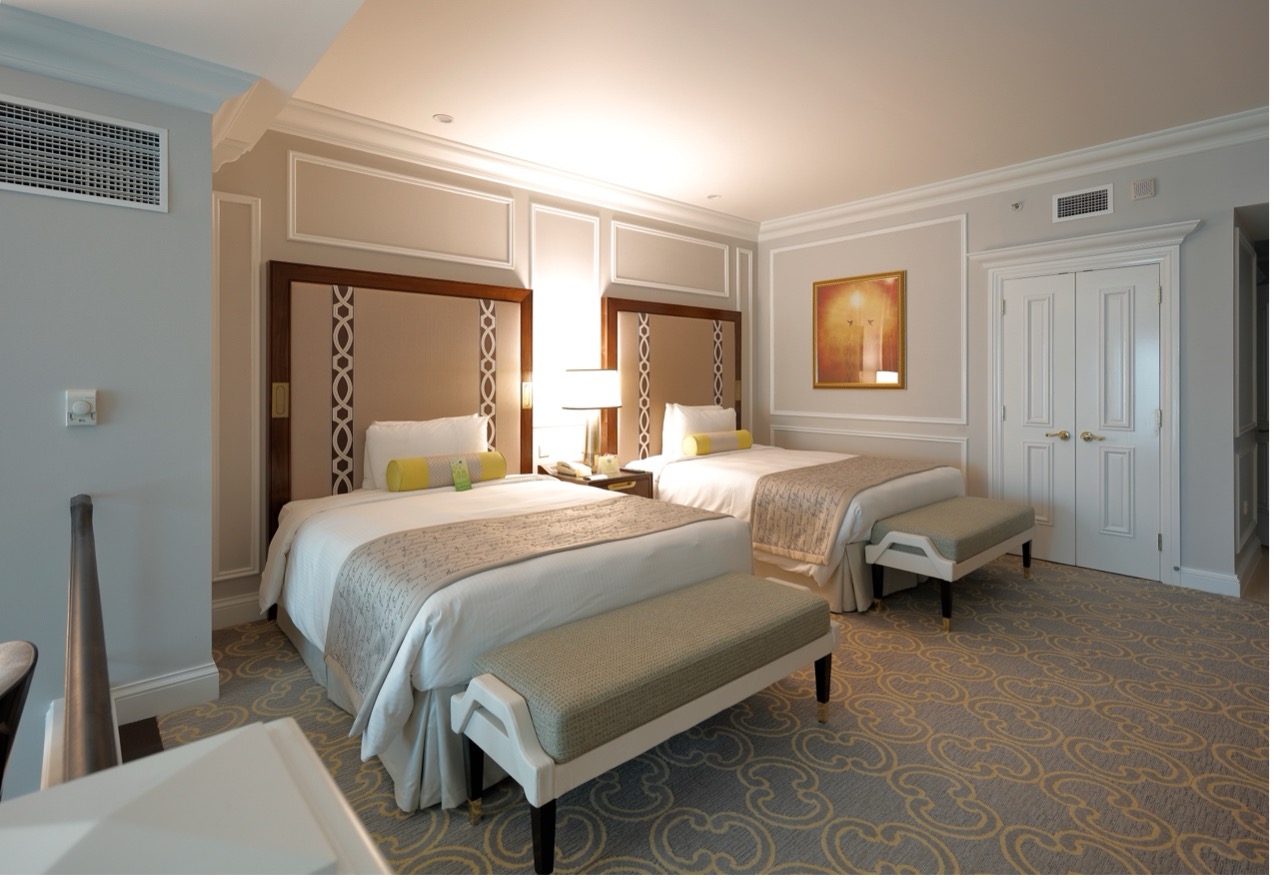
How Bed Dimensions Drive FF&E Selection
Once the bed size is fixed, it dictates the proportions of nearly everything around it. The pieces are not chosen in isolation; they are scaled to the bed.
Scaling the Headboard to the Bed
A headboard is sized to the bed width, not picked on its own. A headboard spanning a 76-inch king reads balanced, while the same panel over a 60-inch queen looks oversized and wastes usable wall. Specifying a single headboard width across mixed room types is a common way to end up with proportions that look wrong in half the rooms [1].
How High Should Nightstands Sit?
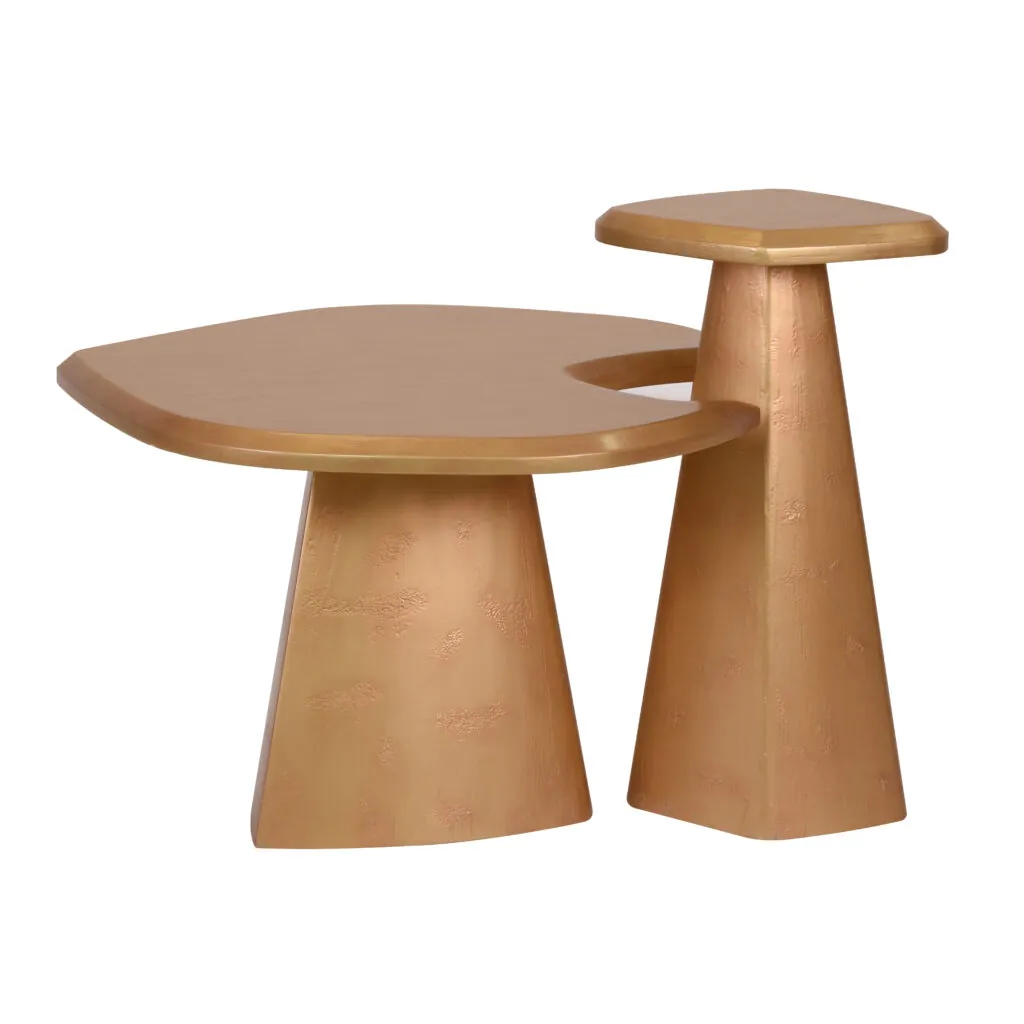
Nightstands work best when the top sits roughly level with the top of the mattress, so a guest reaches a phone or a glass of water without fishing downward. Because finished mattress height varies with the build, the nightstand height is best confirmed after the bed is set, not specified blind from a catalog.
Bench and Ottoman Sizing for King vs Cal King
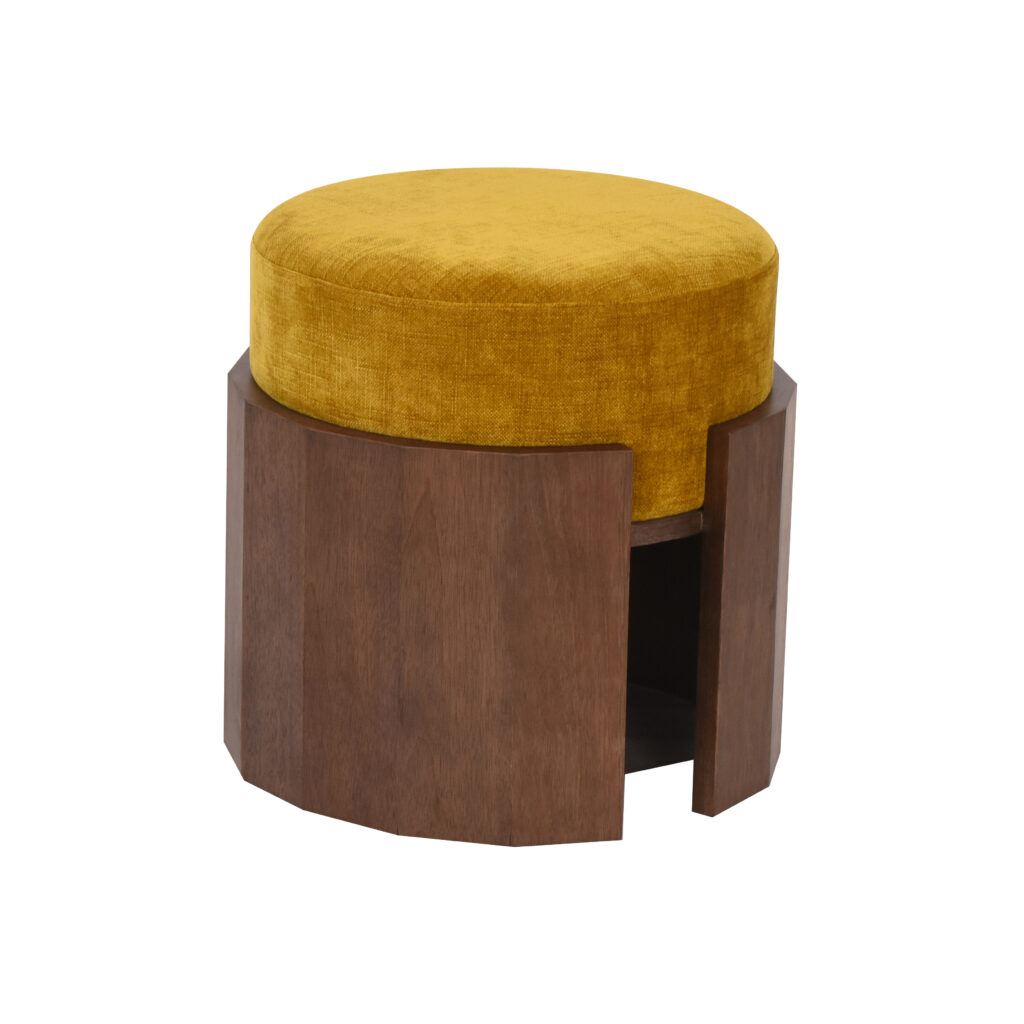
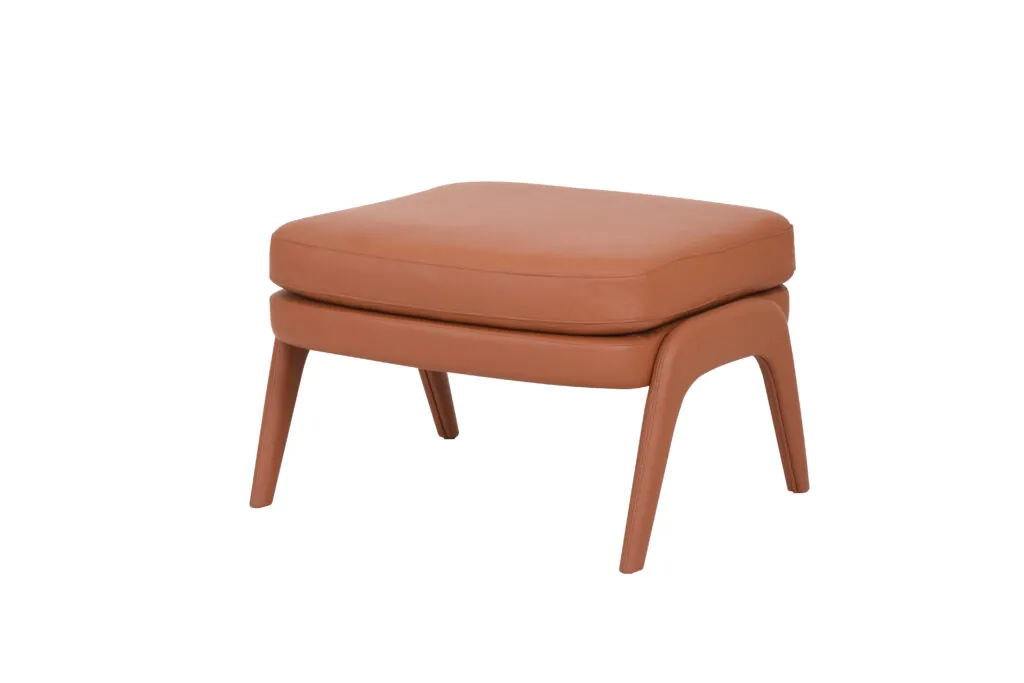
An end-of-bed bench is proportioned to both the bed width and the foot-of-bed clearance. A king is 76 inches wide while a California king is 72, so a bench cut for one will overhang or underfill the other. The California king’s extra 4 inches of length also eats into the walkway the bench has to sit in, which is easy to miss until installation [1].
What’s Left for Wardrobe and Desk?
Whatever the bed and its flanking pieces do not occupy is the residual envelope for the wardrobe, luggage bench, and desk. Upsizing the bed late in design is the single most common way that residual space collapses, forcing a wardrobe or desk downgrade that nobody planned for.
Hotel Bed Size by Property Type
Bed size tracks closely with positioning, so the property tier usually predicts the standard before any room is drawn.
Most properties also carry a deliberate mix rather than one bed type throughout. A floor of king rooms for couples sits alongside twin-share rooms for tour groups and families, and the FF&E package has to be planned for each configuration, not averaged across them.
| Property tier | Typical standard bed | Procurement note |
|---|---|---|
| Budget / 3-star | Twin or Full | Space efficiency first; doubles are often Full, not Queen |
| Midscale / 4-star | Queen standard, King as upgrade | Queen is the double-occupancy baseline |
| Luxury / 5-star | King baseline | Suites go custom; California king where length matters |
| Cruise & yacht cabins | Space-constrained, often custom | Cabin envelope is fixed first, bed sized down to fit |
The cruise and yacht case inverts the usual order. The cabin dimensions are locked by the vessel, so the bed is sized down to the space rather than the room being built around the bed, and every centimeter is costed. Gainwell builds marine furniture for exactly these constraints, where standard land sizes rarely apply and custom is the norm.

A Five-Question Checklist Before You Lock Bed Specs
Run these before the bed size goes onto a spec sheet, because each one is cheaper to answer now than to rework later.
The Bottom Line
Bed size is not a detail to settle at the end of a bedroom design. It is the dimension every other line in the FF&E package inherits, from circulation to headboard scale to the wardrobe that has to fit whatever space is left. Lock it early, in the right units for the market, and the rest of the layout resolves cleanly instead of being reworked against the factory clock.
As a contract manufacturer that builds beds, headboards, and the surrounding casegoods to project specifications, Gainwell works as an FF&E partner from the bed outward. Bring the room type and the target bed size, and the rest of the spec sheet follows from there.
Sources
- Mattress Sizes. Better Sleep Council. 2026. bettersleep.org
- 2010 ADA Standards for Accessible Design. U.S. Access Board / U.S. Department of Justice. 2010. access-board.gov
- UK and Ireland Standard Bed Sizes. National Bed Federation. bedfed.org.uk
Disclaimer: All logos and trademarks used in this article are owned by their respective companies and are used only for brand identification and introduction. They do not represent any cooperative relationship between this website and the relevant companies.