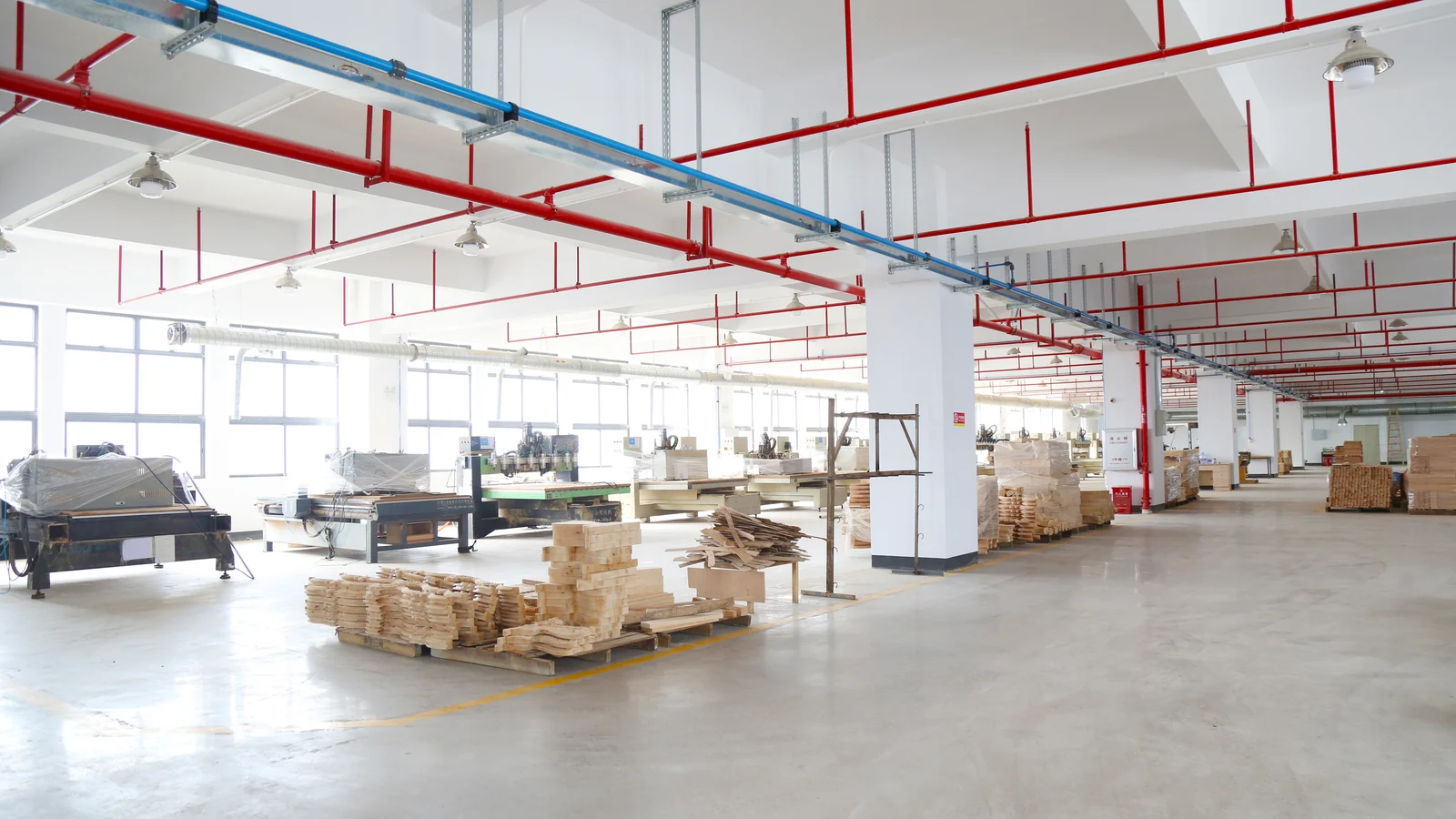
Custom hospitality furniture since 1995 · China & Vietnam manufacturing

What Furniture Goes Into a Hilton Guestroom? Brand Tiers, Specifications and Compliance

There is no single answer to what furniture a Hilton guestroom takes, because Hilton is not one product. The portfolio spans luxury, lifestyle, full-service, focused-service and extended-stay brands, and the furniture expectation moves substantially across that range. This guide helps owners, franchisees and project teams work out which expectation applies to their property, what the guestroom package contains at that level, which compliance regime governs it, and what changes when a Property Improvement Plan arrives.

Design standards for any branded property are issued by the brand to the owner through its own channels. This guide does not reproduce them. It covers what is publicly established about brand positioning, what commercial-grade construction generally requires at each level, and the regulatory standards that apply regardless of brand.

Start with the brand, not the furniture category

The most common specification error on a branded project is treating "hotel furniture" as one grade. A guestroom desk for a focused-service property and a guestroom desk for a luxury property share a name and very little else — different substrate, different finish system, different hardware, different expected service life.

Before pricing anything, establish which brand within the portfolio the property carries, and whether it is a new build, a conversion or a renewal. Those two facts determine more of the specification than any design preference.

Map the portfolio to furniture expectations

Portfolio tier Representative brands Guestroom furniture profile
Luxury Waldorf Astoria, Conrad, LXR Bespoke casegoods, mixed materials, stone and metal detailing, high-specification finishes, significant public-area feature work
Lifestyle and collection Curio Collection, Canopy, Tapestry Collection, Motto Property-specific design intent, custom pieces, greater variation between properties within the same brand
Full service Hilton Hotels & Resorts, DoubleTree, Signia, Embassy Suites Substantial custom casegood packages built to a consistent program across a large room count
Focused service Hilton Garden Inn, Hampton, Tempo Standardised, high-durability packages; unit cost and replacement cycle dominate
Extended stay Homewood Suites, Home2 Suites Kitchenette-adjacent joinery, higher wear tolerance, longer guest dwell time

Treat this as an orientation to expectation, not as a specification. The controlling document is always the standard issued to the property.

Build the guestroom package list before you price it
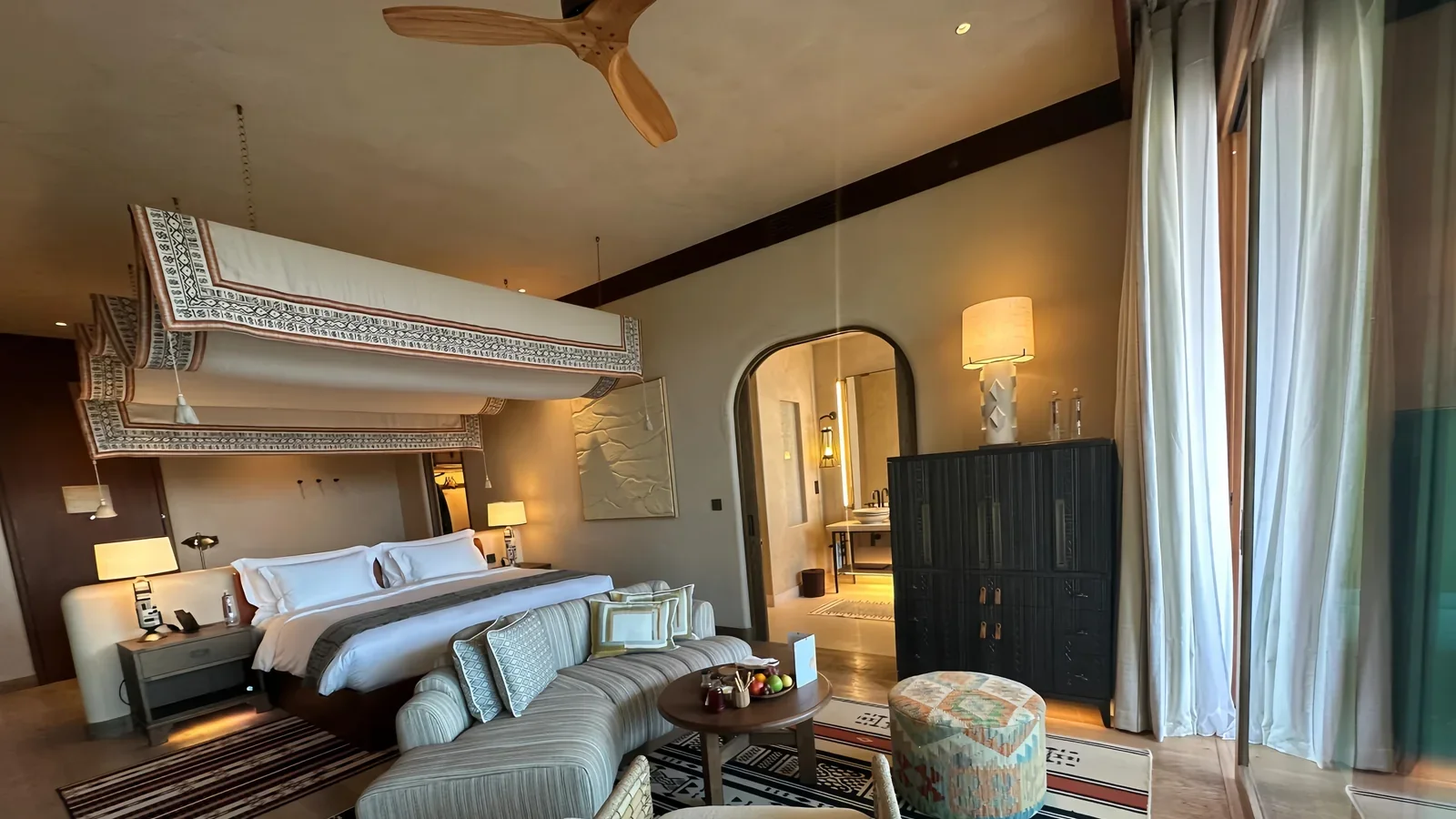
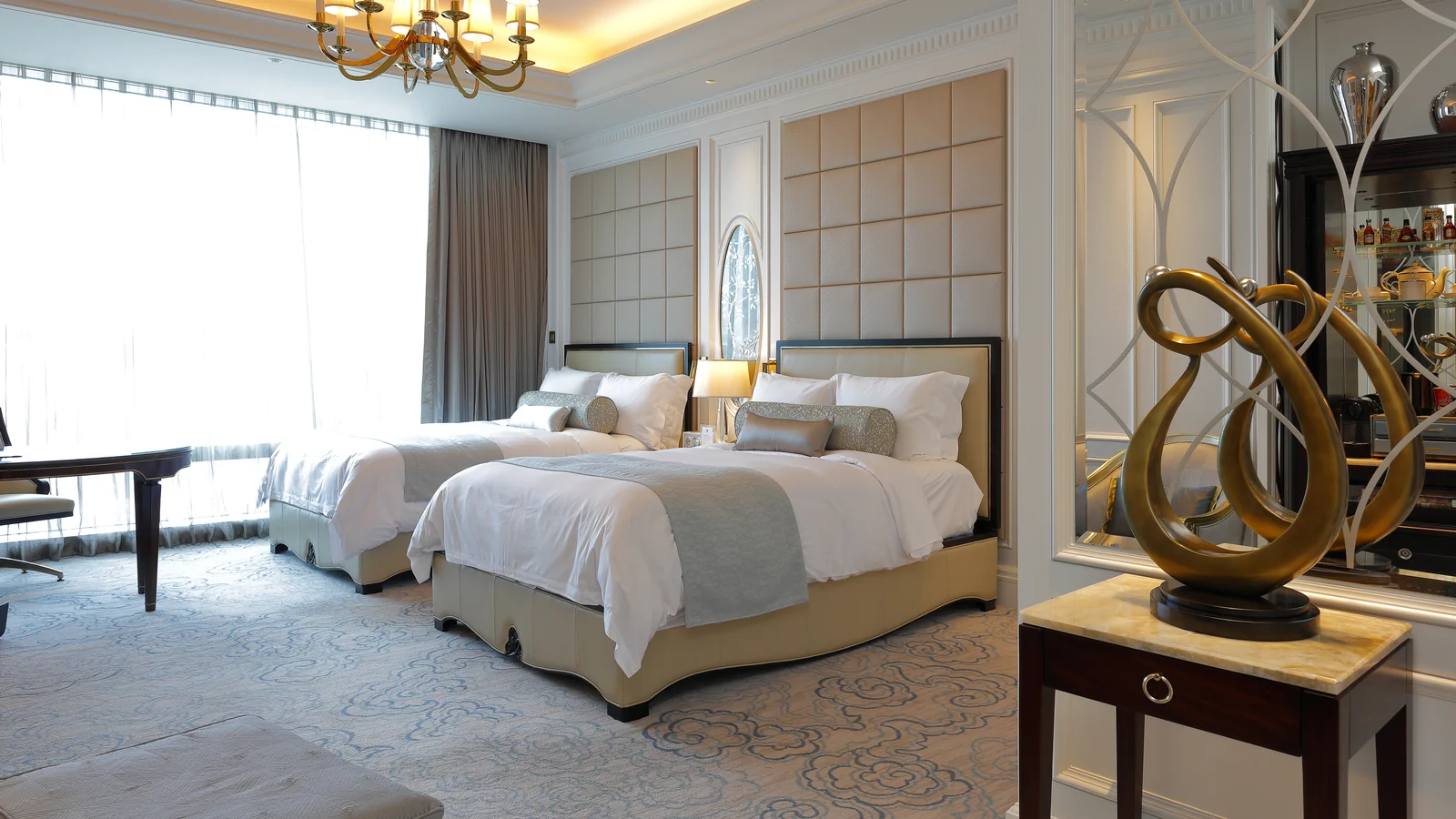
Completed hotel guestroom FF&E arrangement
Completed hotel guestroom FF&E arrangement. This first-party photograph is shown for project context and does not by itself prove a specification or performance claim.

Whatever the tier, price against a written list. Our guide to hotel FF&E scope and responsibilities sets out where the furniture package ends and adjacent scopes begin, which is the boundary most often disputed on branded projects. A quotation that does not state what it includes cannot be compared to another one.

A typical guestroom package contains:

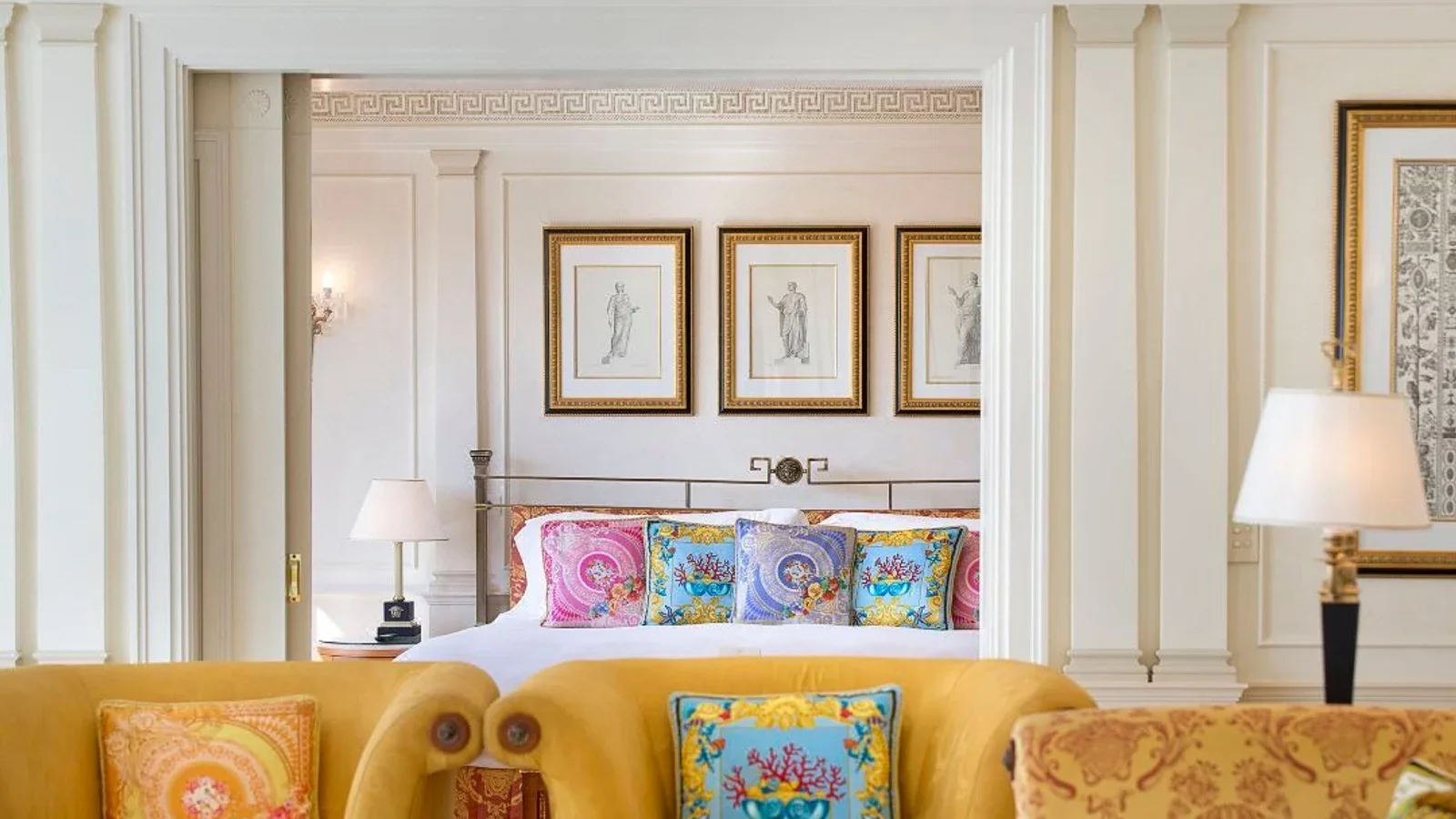
Hotel suite with coordinated FF&E zones
Hotel suite with coordinated FF&E zones. This first-party photograph is shown for project context and does not by itself prove a specification or performance claim.

At luxury and lifestyle tiers, add feature and public-area pieces. At focused-service tiers, expect a tighter list with more standardisation between rooms.

Set the performance thresholds the standard assumes

Brand standards define outcomes. The construction that delivers those outcomes is where quotations diverge.

Element What to specify Why it matters at brand level
Substrate Type, thickness, density, moisture content range Determines whether a vanity or luggage bench survives to the next renewal
Veneer or laminate Species, thickness in millimetres, or HPL grade Thin veneer cannot be refinished at renewal; it must be replaced
Hardware Manufacturer and model for slides, hinges, catches The most frequent silent substitution, and the most common early failure
Upholstery Abrasion rating and test method Commercial guestroom seating generally sits well above 30,000 double rubs; public-area seating higher
Foam Density, not thickness Thickness alone does not describe performance
Finish system Coating type and number of coats Determines resistance to heat, alcohol and cleaning chemistry
Edge treatment Material and thickness Edges fail first on desks and case pieces in daily use

Material selection against these thresholds is covered in more detail in our guide to selecting hospitality furniture materials for high-use interiors. Write these into the RFQ. A supplier quoting against outcomes rather than construction is quoting against nothing.

Confirm which compliance regime governs the property

This is where projects lose money, and it has nothing to do with the brand.
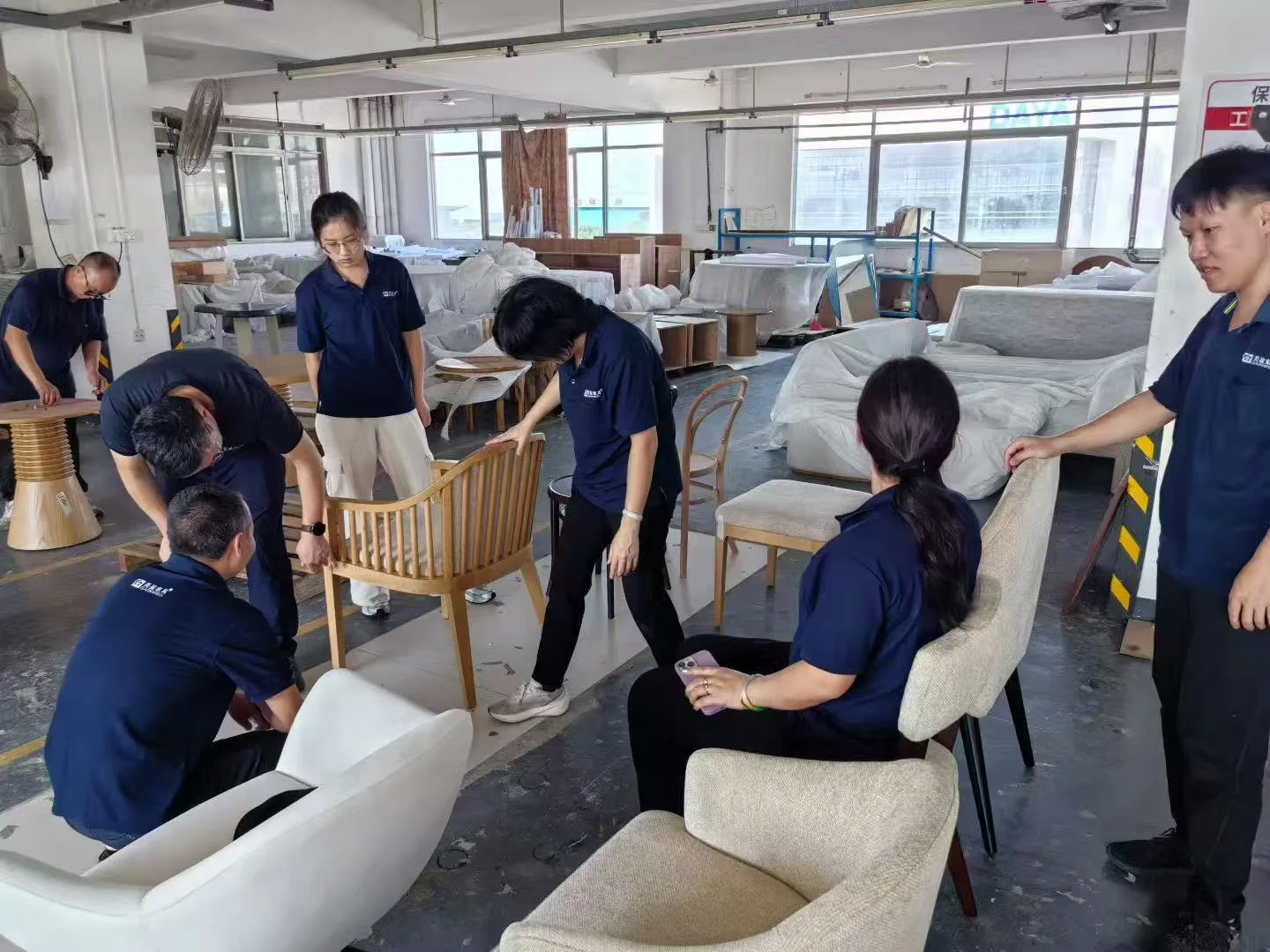
Multiple hotel furniture items under release review
Multiple hotel furniture items under release review. This first-party photograph is shown for project context and does not by itself prove a specification or performance claim.
Destination Upholstery and foam Wood substrates and emissions
United States CAL TB 117-2013; CAL TB 133 where the occupancy classification requires it CARB Phase 2; EPA TSCA Title VI
United Kingdom and EU markets BS 5852; BS 7176 with the relevant hazard classification; Crib 5 where specified Market-specific emissions requirements; FSC or equivalent chain of custody where the specification calls for it

Accessibility requirements apply separately and are dimensional rather than material — clearances, reach ranges and approach dimensions on desks, wardrobes and vanities, governed in the United States by ADA.

Treat BS 5852 and CAL TB 117 as different questions

These are not interchangeable, and a supplier presenting one when the property needs the other is answering a question that was not asked.

If the property is in the United States, BS 5852 documentation tells you nothing about compliance. CAL TB 117-2013 is the relevant upholstery standard, with CAL TB 133 applying to certain occupancy classifications.

If the property is in the United Kingdom or an EU market, the reverse applies, and this is the more expensive direction to get wrong — a shipment of upholstered furniture arriving without the correct fire-performance documentation is not a specification dispute, it is a delivery that cannot be installed.

For a manufacturer supplying both markets, these are separate test programmes on separate components. Ask which reports exist, for which market, rather than asking whether the supplier is "compliant."

Verify test reports at component level, not company level

A certificate held by a factory is not a certificate held by the item in your specification.
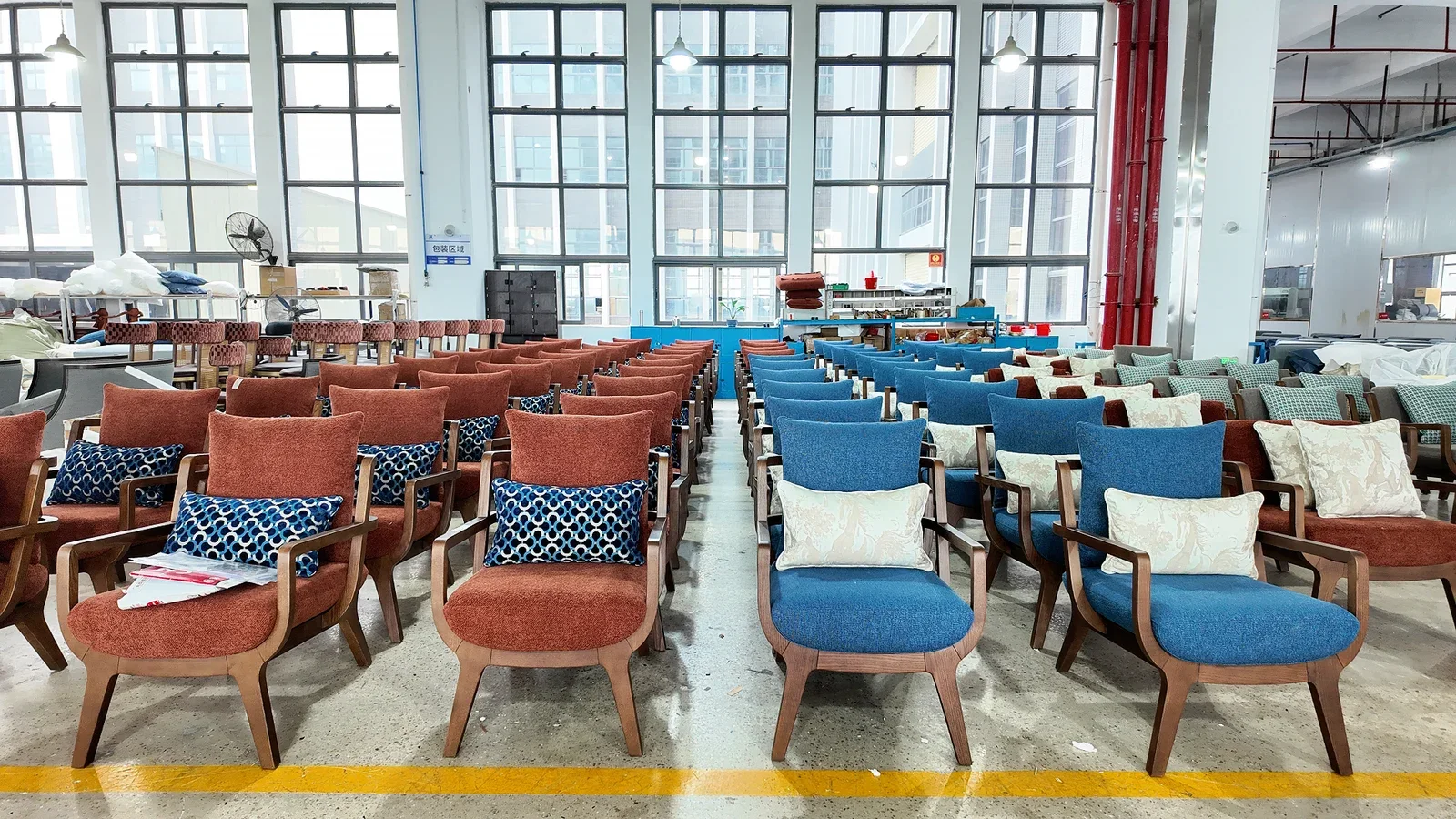
Repeated guestroom furniture in production
Repeated guestroom furniture in production. This first-party photograph is shown for project context and does not by itself prove a specification or performance claim.

Request, for each relevant component: the specific test report, the component or assembly it covers, the issuing laboratory, the issue date, and whether the report covers the exact material combination being supplied. A foam and fabric combination that passed in one configuration has not necessarily passed in another.

Gainwell's certification position, as an example of what to ask a supplier to itemise: CARB for wood-based panel emissions, FSC chain of custody for timber, ISO 9001 and ISO 14001 for quality and environmental management systems, LGA testing on specified assemblies, and China Environmental Labelling certification. Where a European fire-performance report such as BS 5852 is required by the destination market, that is a separate programme and should be confirmed report by report rather than assumed from a supplier's general certification list.

Understand what a PIP changes and what it does not

A Property Improvement Plan is issued by the brand against current standards. It is not written against the property's renewal cycle, and the two frequently disagree.

The cycle most operators work to is soft goods on roughly a five-year interval and casegoods on roughly seven. A PIP can arrive at any point in that cycle and will not adjust for where the property sits within it.

Read the scope as three categories rather than one instruction to replace.

Separate what must be replaced from what can be refinished

Category Typical contents Cost position
Must be replaced Failed substrates — swelling at vanity bases, delamination near wet areas, water damage; seating with compromised frames; items dimensionally incompatible with the new standard Full replacement
Can usually be refinished Sound-core casegoods with solid timber or thick veneer; seating with intact frames Roughly one-third to one-half of replacement, depending on condition
Can often remain Fixed millwork outside the scope; low-traffic pieces still meeting the standard Confirmation cost only

Two conditions determine whether refinished furniture passes brand inspection: finish consistency across the whole run, and hardware matching the current standard. Where part of the inventory is refinished and part is new, both must read as one property under the same lighting. Approve a control sample before work proceeds beyond the first room.

Project team coordinating FF&E requirements
Project team coordinating FF&E requirements. This first-party photograph is shown for project context and does not by itself prove a specification or performance claim.

Veneer at 0.2 mm and below generally cannot be refinished — there is insufficient material to work back to.

Sequence the mock-up room against brand sign-off

Build and approve one physical room before committing the full quantity. The expensive failures on branded programmes are consistently on projects where mass production began against drawings that had never been built.

Our guide to reviewing a hotel furniture prototype before production covers what to inspect and in what order. Establish before production: who from the brand signs off, whether sign-off is on the physical room rather than renderings, what the approval covers, and how long the review takes. Put the answer in the programme.

Ask suppliers the questions that reveal brand-programme experience

Hotel guestroom with custom casegoods and seating
Hotel guestroom with custom casegoods and seating. This first-party photograph is shown for project context and does not by itself prove a specification or performance claim.

Know what supplier claims about brand relationships actually mean

Hotel brand names and logos on a manufacturer's website indicate that the manufacturer states it has supplied a property carrying that brand. They do not establish current approved-vendor status with the brand, and they should not be read as doing so.

This distinction matters because it is easy to test. Ask for two or three named recent properties, then contact the developer, procurement firm or contractor directly. A supplier with real programme history will provide them.

Applied honestly, the same test applies to us. Gainwell has manufactured for properties across Greater China, Asia Pacific, the Middle East and North America, including Waldorf Astoria in Qatar — a Hilton portfolio brand — alongside Ritz-Carlton Macau, JW Marriott Riyadh, Palazzo Versace Macau, Nikko Style Niseko HANAZONO and Novotel Apartment Makkah. That is a record of properties supplied. It is not a claim of approved-vendor status with any brand, and no supplier's project list should be read as one.

Worked example: specifying a focused-service conversion

A 140-key property converting into a focused-service Hilton brand, PIP issued, United States.

The controlling constraints are the brand standard for that specific brand, CAL TB 117-2013 on upholstery, CARB Phase 2 and TSCA Title VI on wood substrates, and ADA dimensional requirements.

The specification decision is not "what looks like the brand." It is: which existing casegoods have sound cores and thick enough veneer to refinish; which have failed and must be replaced; what the replacement items must meet in substrate, hardware and finish to survive to the next renewal; and whether the mixed inventory can be brought to a single visual standard.
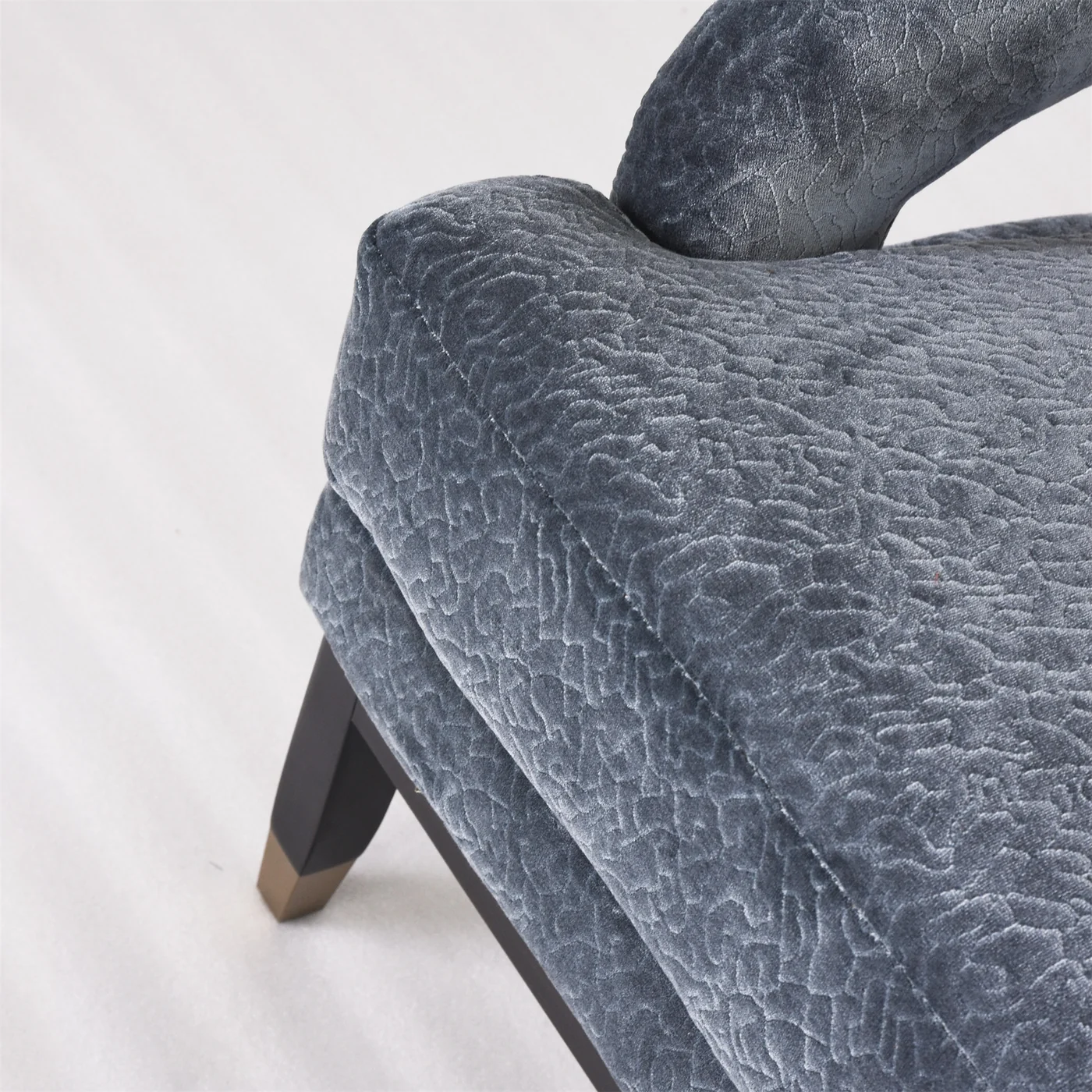
Close view of an upholstered seating seam and arm interface
Close view of an upholstered seating seam and arm interface. This first-party photograph is shown for project context and does not by itself prove a specification or performance claim.

The furniture budget follows from those answers. It does not follow from the room count.

Prepare a specification pack for brand review

Frequently Asked Questions

What furniture is normally included in a Hilton guestroom package?

The package commonly includes sleeping, bedside, storage, work, luggage and seating elements, but the exact items depend on the specific Hilton brand, room type, region and current project documents. Build the schedule from the controlling brand standard and approved design package rather than copying a list from another property.

Do all Hilton brands use the same guestroom furniture specifications?

No. Hilton's portfolio includes different brand positions and operating models, and specifications can also vary by region, prototype, property condition and approval date. Confirm the named brand and the current controlling documents before using dimensions, finishes, hardware or performance requirements from another programme.

How does a Property Improvement Plan affect guestroom furniture?

A PIP identifies required property changes, but the furniture response still needs an item-by-item decision. Classify existing pieces as retain, refinish or replace, then connect replacements to current brand, code and project requirements. Confirm approval responsibilities and timing before assuming that a visually similar item will be accepted.

Does supplying one Hilton property make a manufacturer an approved Hilton vendor?

Not necessarily. A project reference shows that a supplier states it worked on a named property; it does not by itself prove current portfolio-wide approval. Ask the brand, owner or purchasing representative to confirm any required vendor status for the actual programme, and verify recent references directly.

What compliance information should a Hilton guestroom furniture schedule include?

List each item's destination, material and applicable project requirement, then identify the exact report, declaration or approval needed. Upholstery, composite wood, electrical components, accessibility interfaces and wall fixing can follow different rules. The project team should confirm the current requirements; a brand name alone is not a compliance specification.
How to Build a Restaurant Furniture Budget

A single price per seat does not tell you the cost of restaurant furniture. It does not define which chairs, tables, banquettes or service cabinets are included, whether the figures use approved specifications, or where freight, tax, installation and site responsibilities begin. It creates precision before the scope is ready.

Build the budget in this order: freeze the quantity basis, separate item families, normalize unit rates, add defined fixed costs, reconcile commercial boundaries and then assign risk only to unresolved inputs. The result is a working cost model that can be updated without losing the reason behind each movement.

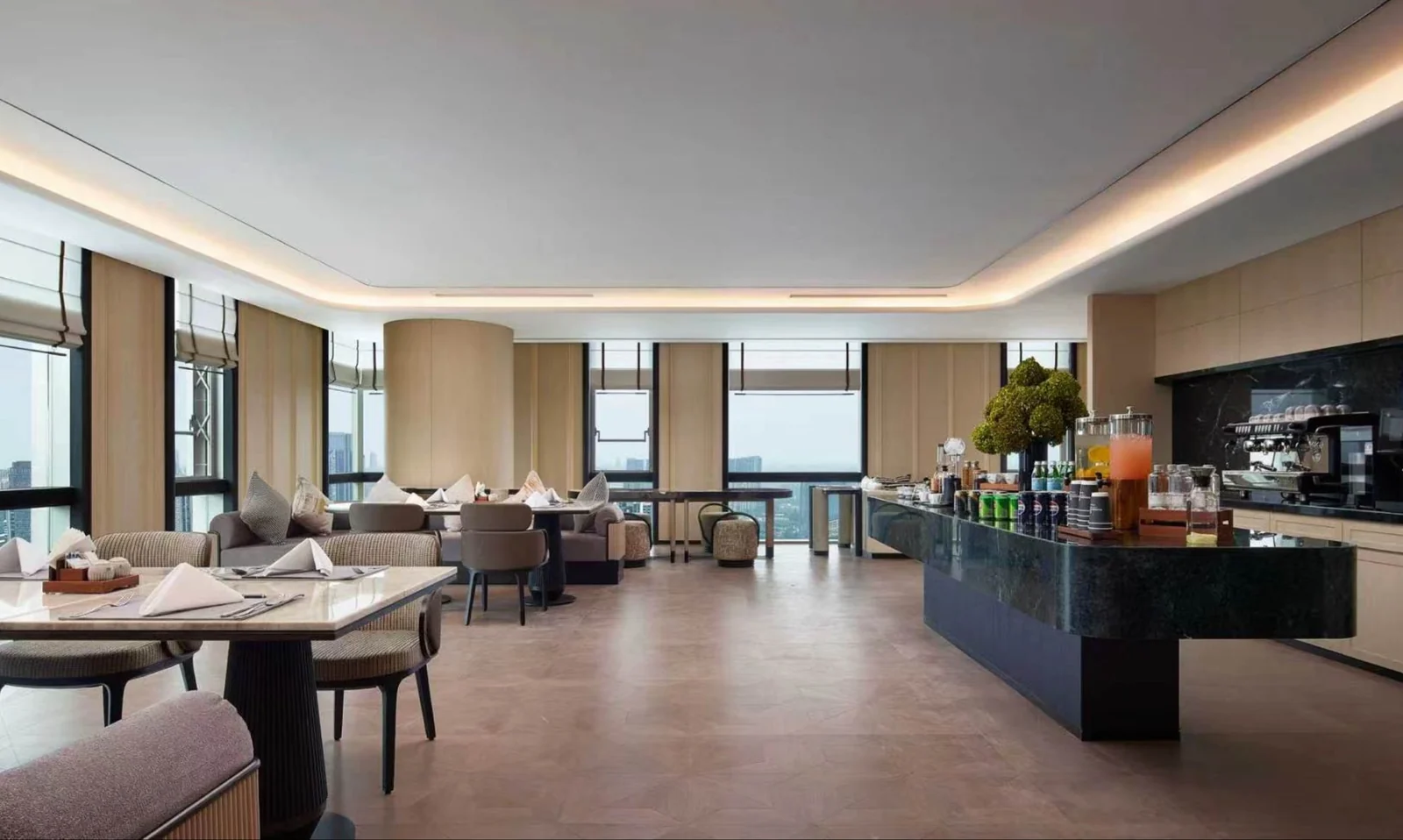
Restaurant dining room with tables, chairs and a fixed buffet counter
A restaurant furniture budget must distinguish loose chairs and tables from fixed service counters, partitions and other measured work.

Build the quantity basis from the approved layout

Start with a dated furniture schedule tied to the current layout. Divide it by zone: main dining, bar or counter, private dining, lounge or waiting, terrace and service-support areas. Give every item a code, description, quantity, drawing or dimension reference, material direction, approval state and required delivery phase.

The quantity basis should expose assumptions. If the layout shows 80 dining positions but chair quantities include spares, record the operating quantity and the spare quantity separately. If table combinations can change, show the actual mix of two-tops, four-tops and larger tables rather than multiplying one average table cost by the seat count.

Use the restaurant furniture layout guide for circulation and furniture-envelope decisions. The cost plan should consume an approved layout revision; it should not quietly change aisle, seat or table assumptions to make the total fit.

Separate loose, fixed and service furniture

Loose furniture is usually counted by item: chairs, stools, tables and movable lounge pieces. Fixed furniture is often measured by length, area, assembly or drawing-defined package: banquettes, host stations, partitions and wall-connected millwork. Service furniture may combine equipment interfaces, storage, worktops and fixed construction. These bases are not interchangeable.

Restaurant seating beside a fixed beverage service counter
Loose dining furniture and a fixed service counter may share one room while using different measurement, approval and commercial boundaries.

Create a scope boundary for each line. State who measures the site, who develops shop drawings, who supplies substrates and finished surfaces, who coordinates equipment openings and who installs or connects the item. A low banquette allowance is not comparable with a fully developed, delivered and installed banquette package.

Use a restaurant furniture cost stack

A practical restaurant furniture cost breakdown separates the visible item price from the work needed to approve, protect and deliver it. Keep the following lanes visible instead of hiding them in one blended rate.

Cost lane Typical content Control question
Base furniture Approved chair, table, stool, banquette or cabinet scope Which drawing, size, material and finish revision is priced?
Development and approval Technical drawings, finish samples, prototypes or mock-ups Is the work included, reusable or charged by round?
Quality and release Agreed inspections, records and corrective actions Which evidence and acceptance criteria apply?
Packaging and logistics Protection, export packing, freight, delivery and handling Where does supplier responsibility end?
Site and installation Access, assembly, fixing, protection and interface work Which party owns the site condition and final connection?
Spares and closeout Approved spare items, labels, references and handover records Are quantities and storage responsibilities defined?
Taxes and duties Destination-specific tax or duty treatment Is it included, excluded or awaiting confirmation?

Gainwell’s current Restaurants & Clubs solution asks for the furniture list, drawings, quantities, performance requirements, finish references, responsibility matrix, destination market and approval dates. Those inputs are also the minimum basis for deciding which lanes can be priced and which must remain open.

Give every lane an estimate state as well as an amount. Mark it as quoted, calculated, allowed, excluded or unresolved, and keep the evidence date beside it. A freight allowance from an early concept budget should not look equivalent to a current route-specific quotation. A tax line awaiting destination advice should not be rolled invisibly into furniture. This simple classification prevents a polished total from hiding different levels of certainty.

Also separate recurring item cost from one-time or limited-use cost. A prototype, special jig, finish-development round or site survey may support more than one item, but it should not be buried in an arbitrary chair rate. State how the fixed cost is allocated, what quantity assumption supports that allocation and whether a later phase would need the work again.

Normalize unit rates before multiplying quantities

A unit rate is useful only when its basis is controlled. Record the item code, revision, quantity tier, dimensions, material and finish references, included hardware, sample status, packaging basis, currency, validity date, delivery term and exclusions. If two offers use different bases, normalize them or keep them visibly non-comparable.

Close view of a blue upholstered restaurant chair back and frame
Upholstery construction, exposed frame details and finish references belong in the unit-rate basis; a chair name alone is not enough.

Do not apply a chair rate to every seating type. A main-dining side chair, bar stool, lounge chair and custom armchair have different assemblies and approval routes. Likewise, separate standard loose tables from custom tops, bases, communal tables and wall-connected pieces. The restaurant furniture materials guide helps define the material-system inputs that the pricing basis must carry.

When quantity tiers differ, preserve both the offered tier and the working quantity. A rate based on a large production run may not survive a reduced phase, spare order or replacement batch. Conversely, do not assume a higher early rate will remain unchanged after details are approved. Treat every rate as a dated commercial input with conditions, not as a permanent product fact.

Reconcile three views of the same budget

One total is difficult to audit. Reconcile the budget through three views:

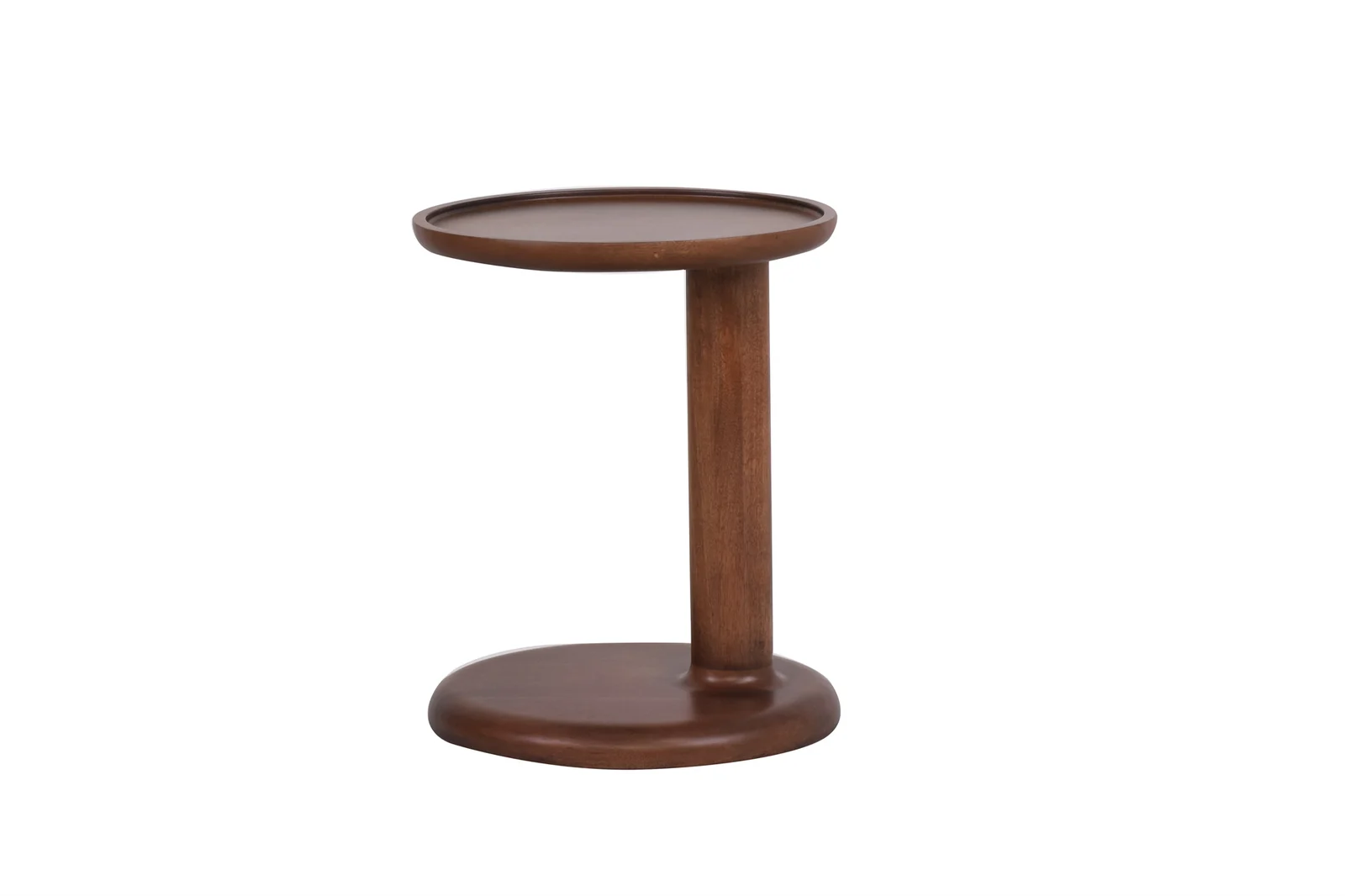
Small round pedestal table shown against a plain studio background
A defined item family, quantity and rate basis can be traced across zone, product-family and commercial-boundary views.

The three views must return the same baseline. If the zone total is higher than the item-family total, a fixed element or spare quantity may have been omitted. If the commercial-boundary view is higher, freight, development or installation may be present in one sheet but absent from another. Reconciliation turns the budget into a control document rather than a presentation total.

Keep three columns when the project is moving: approved baseline, current working forecast and pending change. The baseline records the last authorized basis. The forecast incorporates accepted information. The pending column shows decisions that could still move the total. This prevents an unapproved design change from quietly becoming part of the approved budget while still making its potential effect visible.

Test the method with indexed budget units

A worked example can test the arithmetic without pretending to publish current market prices. Suppose one illustrative main-dining zone contains 80 side chairs at an indexed rate of 1.00, 20 tables at 1.60 and 12 bar stools at 1.20. The loose-furniture baseline is 80 + 32 + 14.4 = 126.4 budget units. A fixed banquette package should be measured and added separately, together with any defined development, packaging, logistics, tax and site lanes.

The figures above are hypothetical budget units, not currency, quotations or Gainwell prices. Their purpose is to show the calculation:

Baseline = sum of quantity × normalized unit rate + defined fixed costs.

Working budget = baseline + confirmed logistics, tax and site costs + risk assigned to named unresolved inputs.

Keep quantity, rate and fixed-cost movements separate. A revised chair quantity is not a price increase; a finish change is not a quantity movement. That distinction makes later approvals more defensible.

Add risk only to unresolved inputs

Do not add an unexplained percentage and call the budget safe. Create an unresolved-input register. For each item, state the uncertainty, probable cost path, owner, evidence needed, decision date and what happens if it remains open. Examples include an unapproved upholstery reference, incomplete banquette dimensions, an unconfirmed delivery boundary or a destination tax treatment awaiting advice.

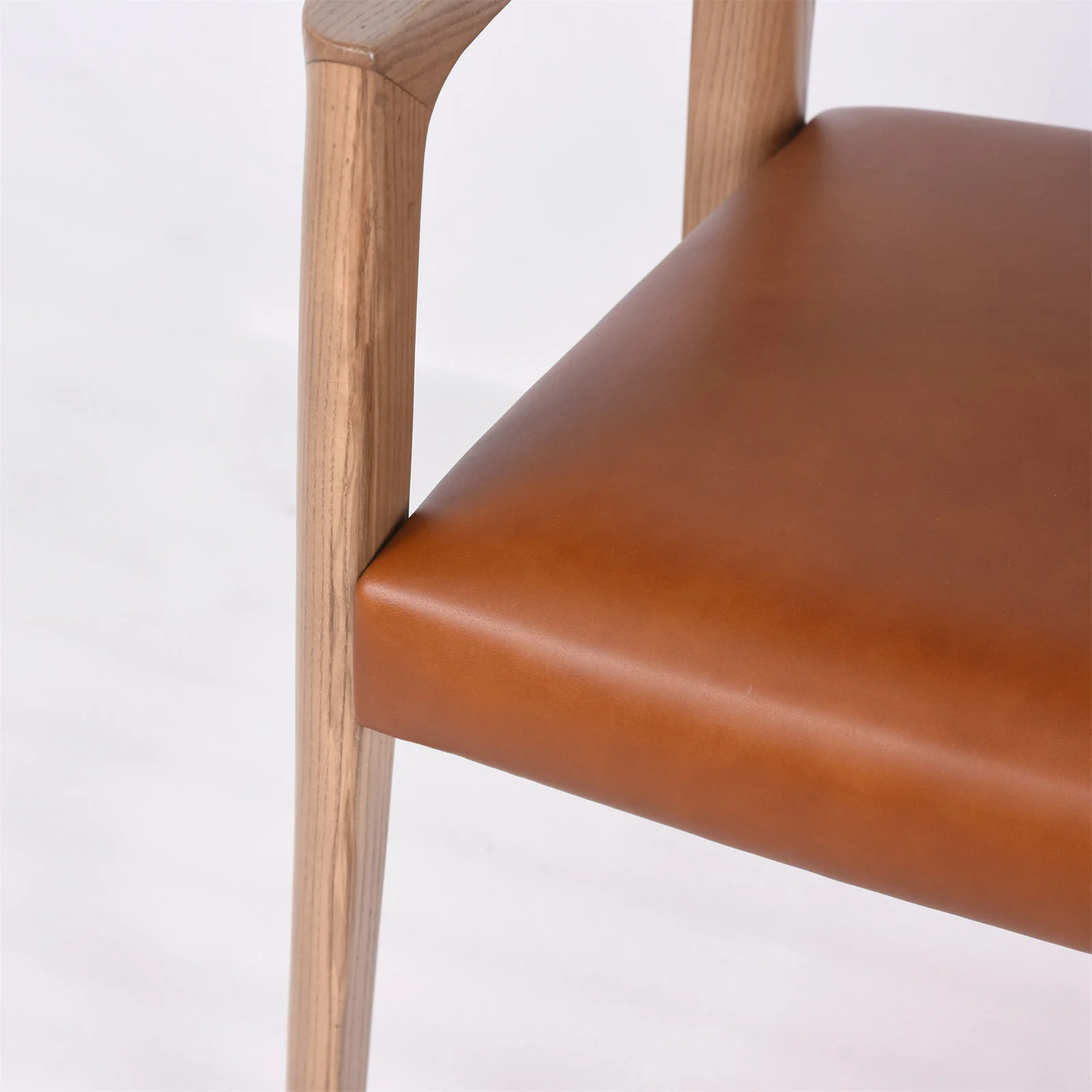
Brown upholstered restaurant chair seat with a pale timber-colored frame detail
A finish or material reference that is still open should carry a named budget risk until the priced specification is confirmed.

Apply risk to the affected line or lane and remove it when the uncertainty closes. Keep confirmed costs, allowances and risk separate. For broader project-level rules on estimate states, movement and exposure, use the FF&E budget planning guide; this restaurant method remains focused on furniture scope and pricing inputs.

Control every change with a budget impact log

Record the old and new quantity, specification or boundary; the reason; the drawing or instruction; the cost effect; the programme effect; the approver; and the effective date. Classify each movement as quantity, specification, rate, logistics, tax, site condition or correction. Never overwrite the prior basis without a trace.

Restaurant interior with varied custom chairs, tables and wall panels
Different furniture families and surrounding fixed finishes can change through separate approvals, so their budget effects should remain traceable.

Before approving an updated total, confirm that the quantity schedule, rate register, fixed-cost schedule, commercial boundary and unresolved-input register use the same revision date. Then issue a short bridge from the previous total to the new one. This preserves the decision history when design, sourcing or delivery conditions change.

To request a project-specific review, send the current layout, furniture schedule, quantities, drawings, material direction, destination, responsibility matrix, approval dates and delivery phases through the Gainwell project enquiry. Current prices, capacity, production source, tests, samples, warranty, programme, taxes and delivery responsibilities must be confirmed against the live scope.

Frequently Asked Questions

How much does it cost to furnish a restaurant?

There is no reliable universal total. Cost depends on the quantity and mix of loose and fixed items, specification, customization, approval work, packaging, logistics, destination charges, site scope and timing. Build the amount from a dated schedule and normalized rates, then state every inclusion and exclusion.

What affects restaurant furniture cost?

The main drivers are item type, dimensions, material and finish references, construction complexity, quantity tier, samples, fixed-work interfaces, packaging, delivery boundary, installation scope, spares and unresolved project conditions. Record each driver against the affected item or cost lane.

Is price per seat useful for restaurant furniture budgeting?

It can be an early sense check, but not the budget basis. Seat counts do not describe table mix, bar stools, lounge furniture, banquettes, host stations, service cabinets or commercial boundaries. Use a zone and item schedule for the working budget.

What should be included in a restaurant furniture quote?

A comparable quote should identify the item and revision, quantity, dimensions, material and finish basis, hardware, development and samples, packaging, delivery term, site or installation work, spares, currency, validity, tax treatment, programme assumptions, exclusions and deviations.

How should restaurant booths and banquettes be budgeted?

Measure them as drawing-defined fixed packages rather than using a loose-chair rate. Define length or assembly basis, site measurement, substrates, upholstery, wall and floor interfaces, access, shop drawings, samples, delivery, fixing, protection and the party responsible for each boundary.

How can restaurant furniture quotes be compared?

Issue one schedule and revision, then normalize quantities, specifications, approval work, packaging, delivery, installation, tax, currency and exclusions. Classify offers as comparable, conditional or non-comparable. Keep missing scope visible instead of converting silence into an assumed inclusion.

How to Choose a Restaurant Furniture Supplier

The best restaurant furniture supplier is not automatically the company with the largest catalogue or the lowest opening price. It is the supplier whose service model fits the venue: the right categories, the right level of customization, clear ownership across restaurant zones and a credible route for replacements after opening.

Choose in this order: define the operating package, select the supplier role, map zone ownership, test recovery capability, approve a representative service-cycle sample and then compare normalized offers. This turns “best” from a brand ranking into a project-specific decision.

Restaurant dining area with banquette seating, loose chairs and service counters
A restaurant package may combine loose seating, banquettes, tables, service counters and surrounding millwork; supplier fit depends on who owns each interface.

Define the operating package before contacting suppliers

Start with the furniture the restaurant must operate, not a mood-board shopping list. Divide the venue into main dining, bar or counter, private dining, lounge or waiting, terrace and any service-support areas. For each zone, record item families, quantities, current dimensions, fixed interfaces, material direction, cleaning method, movement pattern and required approval date.

Mark what is fixed, what remains open and who can approve a change. A banquette linked to wall panels is a different supply problem from a loose side chair. A bar chair cannot be evaluated without the actual counter interface. Outdoor furniture needs its own exposure and operating brief. Gainwell’s Restaurants & Clubs solution similarly organizes the brief around atmosphere, service flow, cleaning, maintenance and repeatable commercial performance rather than appearance alone.

Operating input What it tells the supplier What must remain project-specific
Zone and furniture schedule Category coverage, quantities and fixed-versus-loose scope Final dimensions, interfaces and responsibility
Service and reset pattern How items are moved, approached and cleared Approved layout and operating procedure
Material and cleaning direction Surfaces, seams and transitions that need review Exact material, finish and cleaning compatibility
Opening and replenishment plan Initial phases, spare needs and possible reruns Dates, quantities, storage and commercial basis

Choose the supplier role that matches the scope

Restaurant furniture suppliers can serve different roles. A stock distributor may suit a small, fast requirement where standard dimensions, finishes and replacement availability are acceptable. A custom manufacturer may suit design-led chairs, tables, banquettes or mixed-material items that need drawings, samples and controlled production. A project supplier or hybrid model may coordinate several categories and partners under one schedule.

None of these roles is universally better. The decision is whether the role matches the package and the restaurant team’s available coordination resources. Ask where each category comes from, which items are standard or made to order, who develops drawings, who controls samples, which processes are performed by partners and who answers when two scopes do not meet.

Gainwell’s current capabilities overview describes a connected route through technical development, prototypes, production control and delivery. It also keeps the correct boundary: exact scope, production location, tests, quantities, programme, warranty and responsibilities need confirmation for the live project.

Map venue zones to one named scope owner

Build a venue-to-supplier role map before requesting prices. Put the zones down the left side and the furniture or fixed elements across the top. For every cell, name the proposing supplier, drawing owner, sample owner, production source, delivery owner and final interface approver. Blank or duplicated ownership is an early warning.

Restaurant bar chairs beside lounge dining tables
Bar chairs, lounge dining chairs, tables and fixed counters share one room but create different supplier and interface responsibilities.

The map should expose transitions. Who confirms a bar-chair seat height against the counter? Who aligns a table base with the intended top and floor condition? Who coordinates a loose table against a fixed banquette? Who checks that private-dining pieces can follow the approved route into the room? These questions are more useful than asking whether a supplier can “do restaurants.”

Use the separate restaurant furniture layout guide for circulation and furniture-envelope decisions. Supplier selection should consume that approved layout information; it should not silently redesign it during quotation.

Run a coverage-to-recovery test

Initial category coverage is only half the supplier decision. The second half is recovery: what happens when an item is damaged, a finish reference changes, a venue opens in phases or the operator needs a small rerun? Use a coverage-to-recovery table so attractive first-order pricing does not hide a weak after-opening route.

Test Evidence to request Unresolved condition to record
Initial coverage Item-by-item scope, source and named owner Excluded category or split responsibility
Reference continuity Controlled finish, fabric, hardware and drawing records Reference owned only by an unnamed partner
Replacement route Required item identity, reporting path and quotation basis No method to match the approved version
Small rerun Current MOQ basis, tooling status and likely approval steps Availability or price assumed but not confirmed
Exception response Named escalation route and evidence needed for a decision Responsibility moves between seller and factory

Do not ask for a lifetime availability promise. Ask the supplier to state the present basis and the variables that would trigger a new approval: material discontinuation, changed hardware, tooling changes, revised minimum quantities or a different production source. That produces an honest recovery plan without pretending future conditions are fixed.

Main restaurant dining room with repeated chair and table families
Repeated furniture families make item identity, approved references and future matching more important than a one-time visual impression.

Approve a representative service-cycle sample

Choose a sample set that represents the operating risk, not only the most photogenic item. For many restaurants, that could be one main-dining chair, one table assembly and one high-seat or banquette interface. Define what the review can prove and what it cannot.

A practical service-cycle review follows the real sequence: approach the table, sit, move the chair, clear the setting, reset it and inspect the contact points. Review dimensions, comfort, stability, reach, visible joints, cleanable access and movement against the approved layout and project requirements. If stacking, outdoor exposure, chemical compatibility or a specific performance test matters, confirm the exact method and acceptance criteria for that project.

Restaurant table top and metal support frame connection detail
A sample review should connect visible surfaces to the support, joint and maintenance questions that matter for the actual table assembly.

Record every comment against the item code and drawing revision. State whether the response is accepted, rejected or awaiting evidence, and who can close it. The approved sample should then point to the drawings, material references and exception record that production must follow. The restaurant furniture materials guide provides a separate method for matching material systems to exposure, cleaning and touchpoints.

Normalize offers with a deviation schedule

Supplier comparison begins only after each offer uses the same schedule and revision. Normalize quantities, item dimensions, materials, finishes, hardware, samples, packaging, delivery basis, installation support, spare items, warranty terms, taxes, currency assumptions and exclusions. Put every difference in a deviation schedule.

Then classify the result. A complete offer matches the issued basis. A conditional offer is usable only after named assumptions close. A non-comparable offer changes the material, scope, delivery point or approval burden so substantially that its total cannot be compared with the others. Do not treat silence as compliance.

This approach also prevents a low first price from disguising split freight, omitted samples, excluded hardware, unresolved fixed-work interfaces or a replacement process that starts from zero. Compare the entire supply basis that the operator will inherit.

Test phased openings and multi-location continuity

For a phased opening or restaurant group, ask the supplier to trace one item family across time. Which record identifies the approved version? What changes when the second phase is smaller? How are discontinued materials handled? Which sample or finish reference is retained, and who approves a substitution?

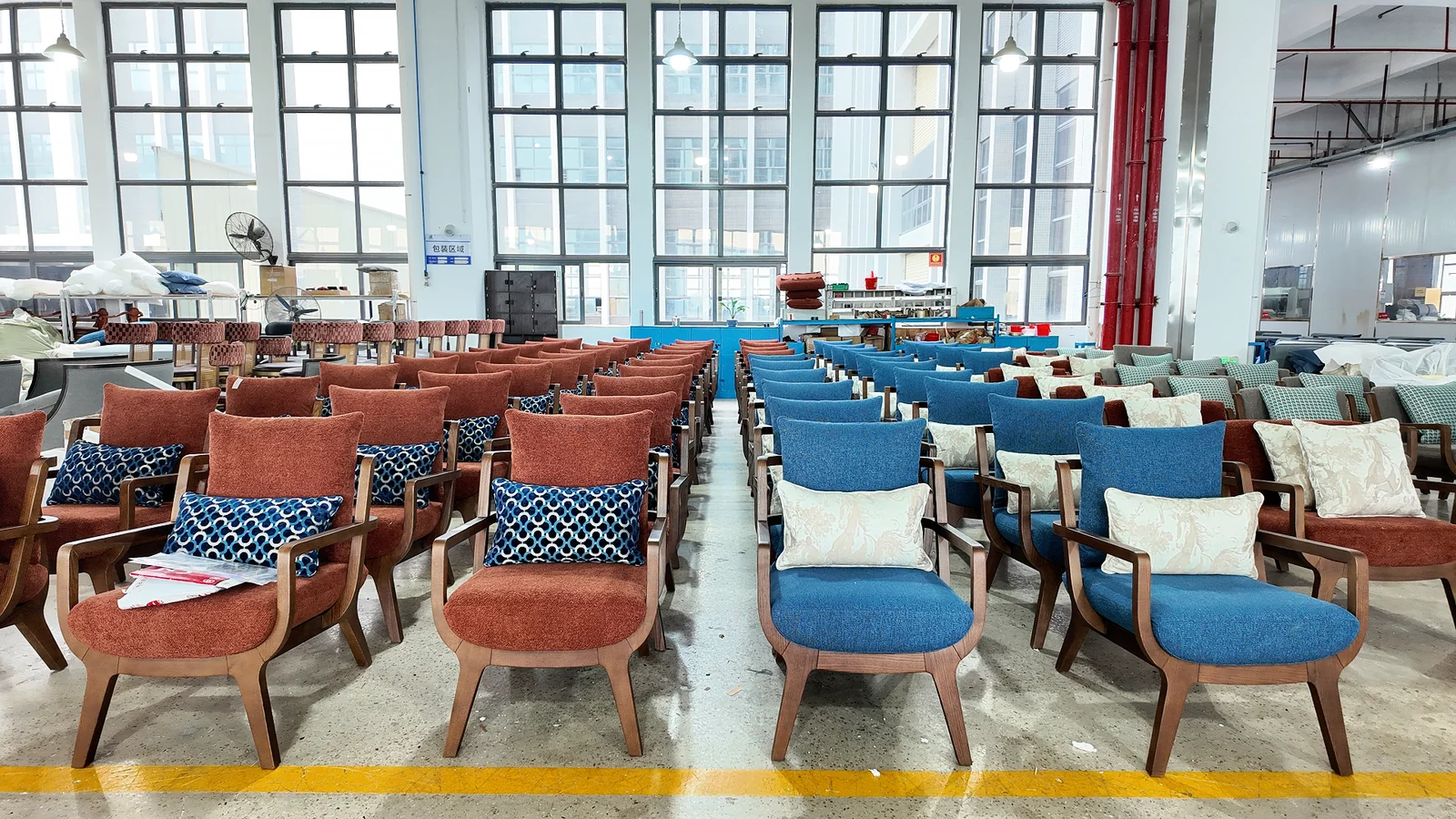
Rows of finished upholstered chairs staged in a furniture factory
A staged batch can show visible family groupings, but continuity still depends on item codes, revisions, references and recorded exceptions.

Ask for a phase register that shows site, item code, quantity, approved revision, finish reference, required date, source and open exception. For multiple locations, separate what must remain identical from what may change for local layout, destination requirements or operator preference. Do not assume that a past price, minimum quantity or lead time will remain available; reconfirm each release.

Make a conditional shortlist decision

Finish with one of three outcomes. PROGRESS means the supplier role, zone ownership, recovery route, representative sample and commercial basis are sufficiently clear for the next controlled stage. PROGRESS WITH CONDITIONS means named evidence must close by a stated date and authority. DO NOT PROGRESS means a critical interface, source, sample, responsibility or commercial basis remains unresolved.

Outdoor restaurant terrace with mixed seating, tables and shade structures
Outdoor dining adds exposure, movement and maintenance conditions that may require a separate supplier scope and approval route.

Keep the decision specific to the venue. A supplier that fits a standardized indoor rollout may not fit a mixed custom restaurant with fixed banquettes and an exposed terrace. Conversely, a complex custom supply chain may be unnecessary for a small standard replacement package.

To request a project-specific review, send the current zone schedule, furniture list, drawings, quantities, destination market, material direction, approval dates and opening phases through the Gainwell project enquiry. Current capacity, production source, tests, samples, prices, warranty, programme and delivery responsibilities must be confirmed against the live scope.

Frequently Asked Questions

How do I choose a restaurant furniture supplier?

Define the operating package first, then match it to the supplier’s role. Verify category and zone ownership, drawing and sample control, production sources, delivery responsibilities and the route for replacements or reruns. Compare suppliers only after their offers use the same scope, revision and commercial assumptions.

What should I send a restaurant furniture supplier for a quotation?

Send a zone-based furniture schedule, quantities, current drawings, dimensions, material and finish direction, destination, approval route, required samples, opening phases and delivery boundary. Mark incomplete information clearly. Ask the supplier to return assumptions, exclusions and deviations instead of filling gaps silently.

Is the lowest price the best choice for restaurant furniture?

Not until the offers are comparable. A low total may exclude samples, hardware, packaging, delivery work, fixed-furniture coordination or replacement support. Normalize scope, specification, approval work, logistics, warranty terms and exclusions, then evaluate the price together with unresolved operational risk.

Can one supplier furnish every restaurant zone?

Sometimes, but category breadth does not prove interface ownership. Map main dining, bar, private dining, lounge, fixed banquettes and outdoor areas separately. Confirm who develops, samples, produces, delivers and resolves each scope, including work performed by partners.

What should be checked in a restaurant furniture sample?

Check the item against its approved drawing, material references and intended zone. Review dimensions, comfort, stability, movement, service access, visible joints, finish, cleaning access and interfaces with tables, counters or fixed work. Add project-specific tests only with an agreed method and acceptance criteria.

How should replacement restaurant furniture be planned?

Keep item codes, approved revisions, finish references, hardware details, production source and exception records. Ask what information is required for a replacement quotation and what could trigger new minimum quantities, samples or approvals. Reconfirm availability, price and programme for every rerun rather than relying on an open-ended promise.

Durable Hotel Furniture: A Failure-Mode Control Method

“Durable” and “contract grade” are useful intentions, but neither is a release record. A hotel chair may have a robust frame and still develop a seam, glide or finish problem. A nightstand may use an appropriate surface while its edge, hardware or floor interface remains unresolved. The material name is only one part of the assembled item.

Durable hotel furniture is furniture whose expected use conditions, plausible component failures, design responses and acceptance evidence have been connected to the same item code. The practical question is not “Will this last?” in the abstract. It is: What could fail here, what has the project done about it, and what evidence allows this revision to move forward?

Luxury hotel guestroom with beds, upholstered furniture and bedside casegoods
Durability is a room-level outcome created by furniture systems, interfaces and repeatable production controls.

Map the use condition before choosing a durability response

Start with the operating condition, not an adjective in the specification. Gainwell’s Luxury Hotels solution separates guestrooms, suites, lobby and lounge, and dining areas because the furniture functions differ across those zones. The same distinction belongs inside a room. A luggage bench, desk edge, lounge-chair arm and wardrobe door may share a finish language while facing different contact, movement and cleaning patterns.

For every furniture code, record the observable condition:

Write the actual condition rather than “heavy use.” “Wardrobe pull and hinge operated during each guest stay” is a usable input. “Stone-like nightstand top adjacent to drinks and the operator’s nominated cleaner” is another. The project can then select an appropriate response and evidence route without pretending that one generic severity label fits every item.

Hotel guestroom with bed, desk, chair, shelving and bedside tables
Map exposure by item: guest contact, housekeeping access, movement, collision risk and cleaning method differ within the same room.

Build a component failure-mode register

A failure-mode register is a design and approval tool, not a prediction that every listed problem will occur. Use one row for each important component or interface. Name the condition, the visible or functional failure that matters, the proposed response, the evidence required and the owner who must close it.

Component group Failure questions to test Useful evidence before release
Frame and joinery Could the item loosen, rack, shift or lose alignment under the defined handling and use? Controlled section and fixing details, prototype observations, required project tests and in-process inspection points
Surface, edge and corner Could impact, moisture, heat, cleaner contact or a cutout affect the face and edge differently? Complete build-up, physical sample, edge detail, cleaner review, support detail and acceptance reference
Hardware and movement Could hinges, runners, pulls, swivels or removable parts become noisy, misaligned or inaccessible? Hardware schedule, fixing and access detail, repeated-operation observation and functional inspection record
Upholstery and seams Could cover tension, seam placement, cushion fit, cleaning or high-contact curves create an early weak point? Upholstery specification, seam and pattern reference, full-form sample, cleaning input and project-required test status
Floor and site interface Could uneven contact, cleaning equipment, glides, wall adjacency or installation conditions affect the item? Base and glide detail, clearances, site information, installation method and final placement check

Keep each conclusion narrow. A photograph can show an exposed seam or a floor gap, but it does not prove hidden construction or performance. A supplier document may identify a component, but it must apply to the exact source, build-up and revision proposed. If the evidence does not match the item, mark the row open.

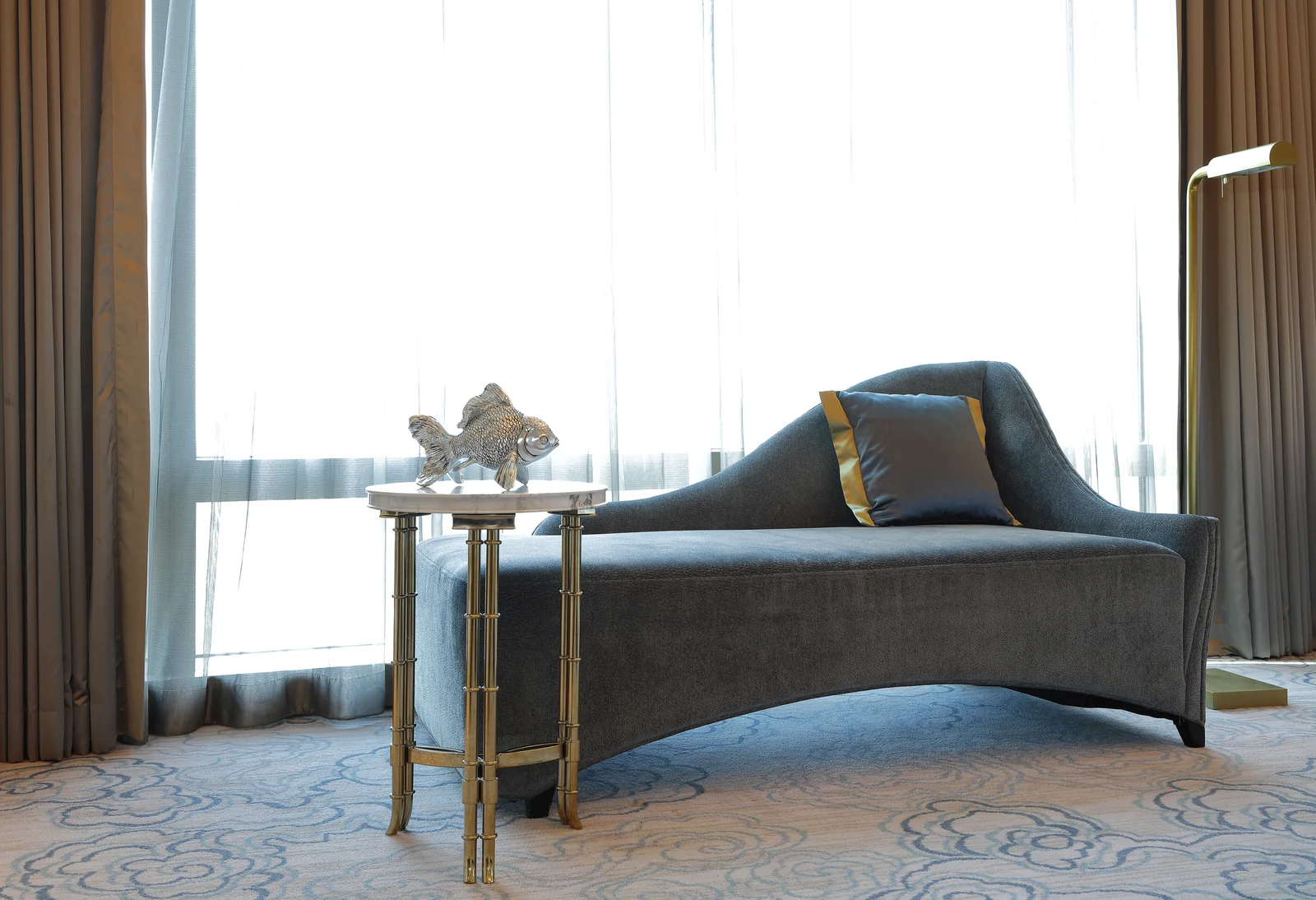
Blue upholstered hotel chaise with cushions and a side table
Review the assembled system: cover, seams, cushion behavior, frame support, feet and nearby impact points can fail in different ways.

Use an evidence ladder, not one certificate or sample

No single record answers every durability question. Build an evidence ladder with five levels, and state which level closes each failure mode:

  1. Requirement: room type, use condition, component, expected function, destination input and acceptance question.
  2. Design definition: drawing, section, material and hardware schedule, edge or seam detail, cleaning input and named test requirement.
  3. Prototype evidence: observation of the complete item, movement and access checks, physical finish references, project-specific tests and a consolidated comment record.
  4. Production evidence: incoming-material identity, in-process checkpoints, functional checks and final comparison against the approved control reference.
  5. Operating evidence: snagging, maintenance findings, recurring damage location and approved corrective action returned to the item record.

An evidence gap at one level cannot always be repaired by adding more at another. A polished prototype does not replace an incomplete fixing detail. A material data sheet does not prove how a seam sits on a curved chair. A factory machine supports a process, but the project still needs an approved detail and recorded inspection result.

Evaluate upholstery as a complete high-contact system

The secondary query “durable upholstery fabrics for hotel furniture high traffic” should not be answered with one fabric name or a universal rub-count threshold. Gainwell’s high-use materials guidance treats upholstery as a system that includes appearance, performance requirements, seam construction, foam, cleaning compatibility and the actual furniture form.

For a lounge chair, sofa, bench or upholstered headboard, link the cover material to the use zone, seam map, pattern direction, backing, cushion or foam specification, attachment method, cleaning products, replaceable parts and required market evidence. Review high-contact curves and the boundary between hard and soft components. If the cover, seam, foam, cleaner or construction changes, reopen the affected evidence rather than carrying the old approval forward.

Blue upholstered lounge chair detail showing seams, arm and seat edge
Seams, high-contact curves and cover transitions need their own evidence and acceptance notes, not only a broad fabric description.

Treat casegoods, edges and hardware as interacting systems

Wardrobes, nightstands, minibars and consoles combine storage function, surfaces, edges, hardware, services and floor contact. Gainwell’s Casegoods & Storage framework coordinates internal layout, hardware, mixed surfaces and inspections of dimensions, alignment, finish and function. Use those categories to structure the failure-mode register rather than reducing the item to “wood casegood.”

At the base, review stable contact, glides, cleaning access, lower-edge exposure and the relationship between legs, rails and panels. At the top, separate the face, perimeter edge, corner, cutout, support and any integrated equipment. For moving parts, identify the hardware source, fixing detail, operating clearance, service access and functional acceptance check. The surface sample remains incomplete until the adjacent details are controlled.

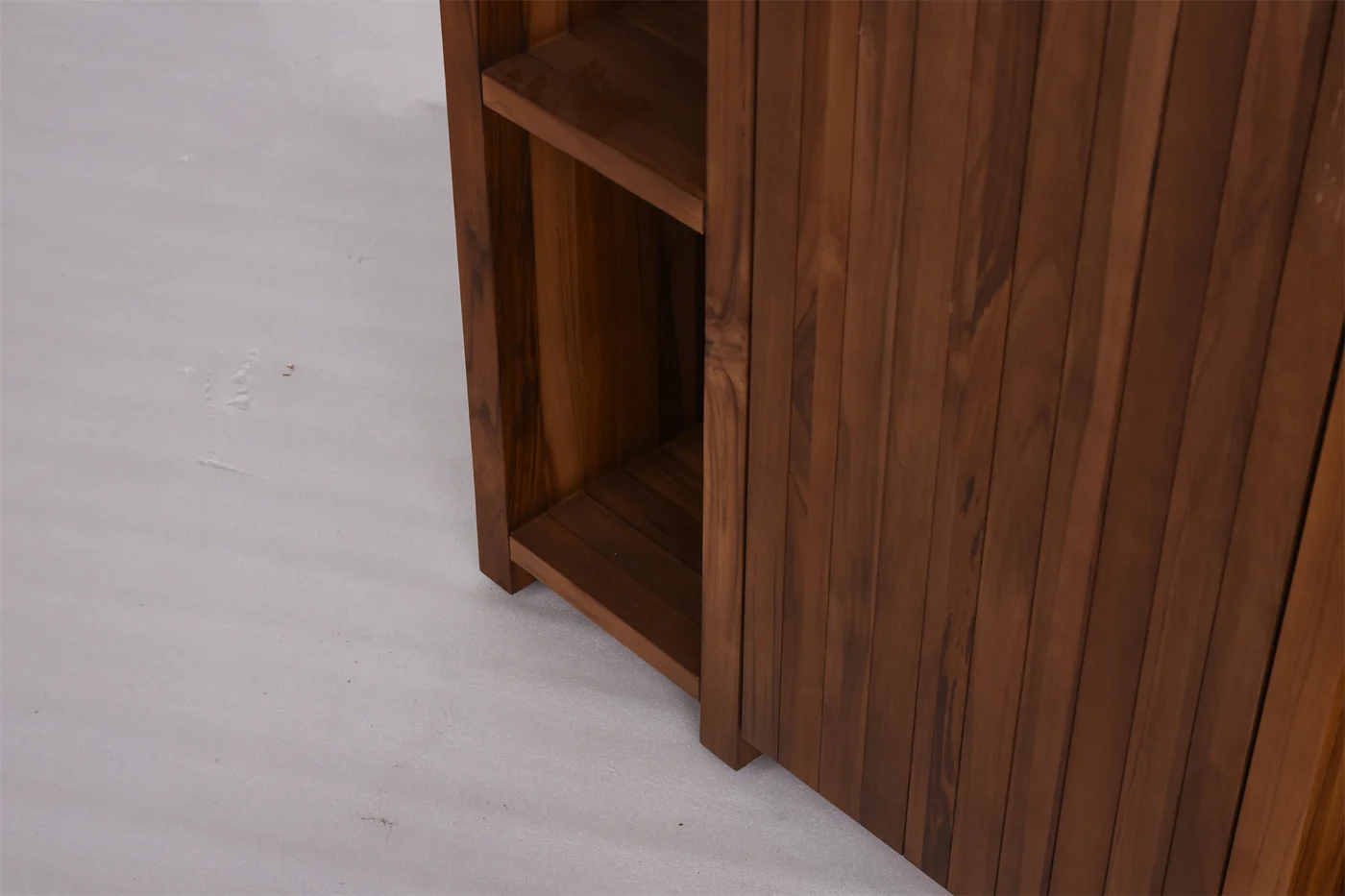
Wood-toned cabinet base with feet, shelves and vertical panel edges
At the base of a casegood, clearance, edge protection, panel alignment and stable floor contact should be reviewed together.
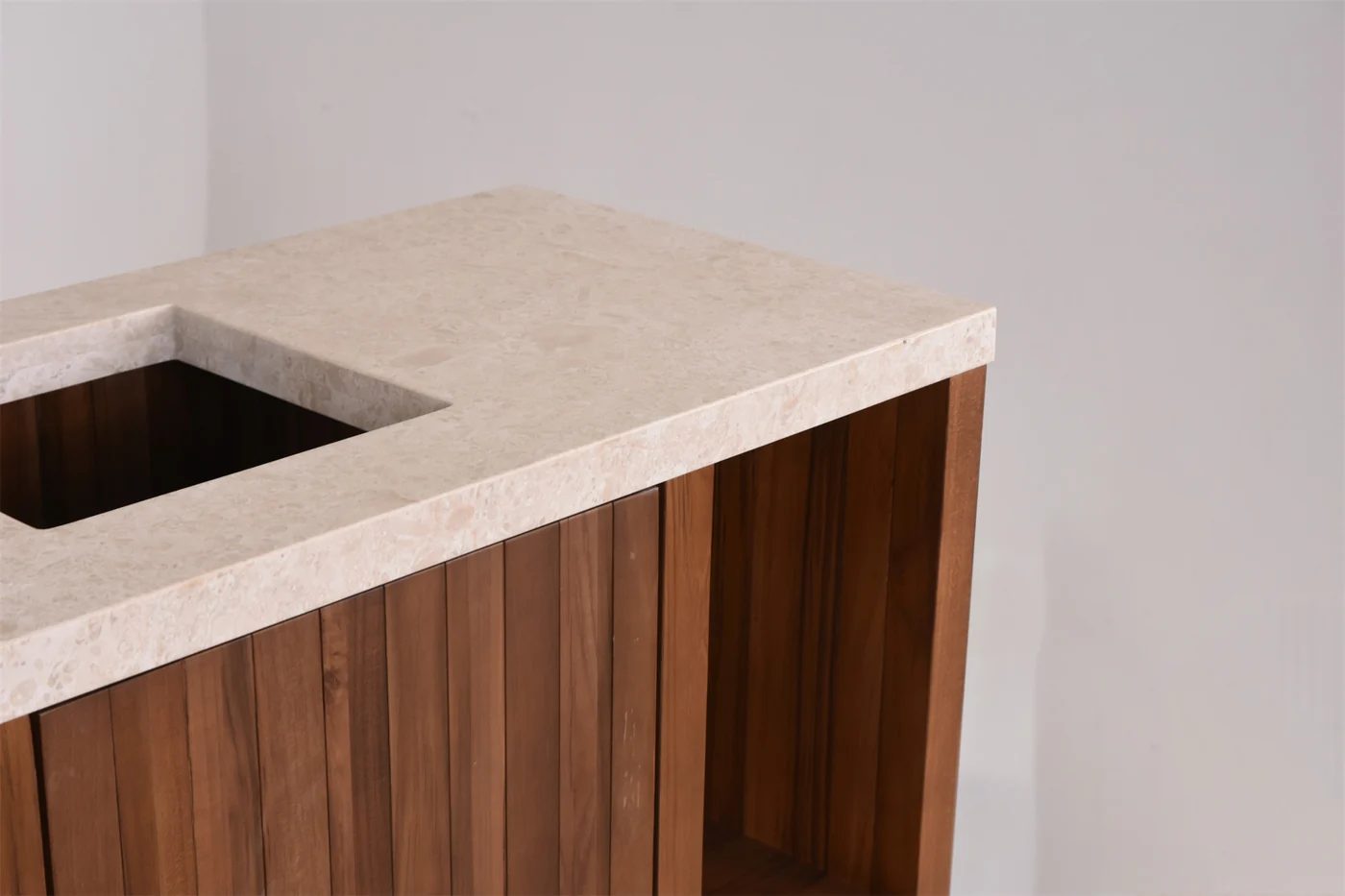
Pale stone-like cabinet top with an opening and wood-toned slatted panels
Top faces, exposed edges, cutouts and supporting panels should be treated as separate durability interfaces.
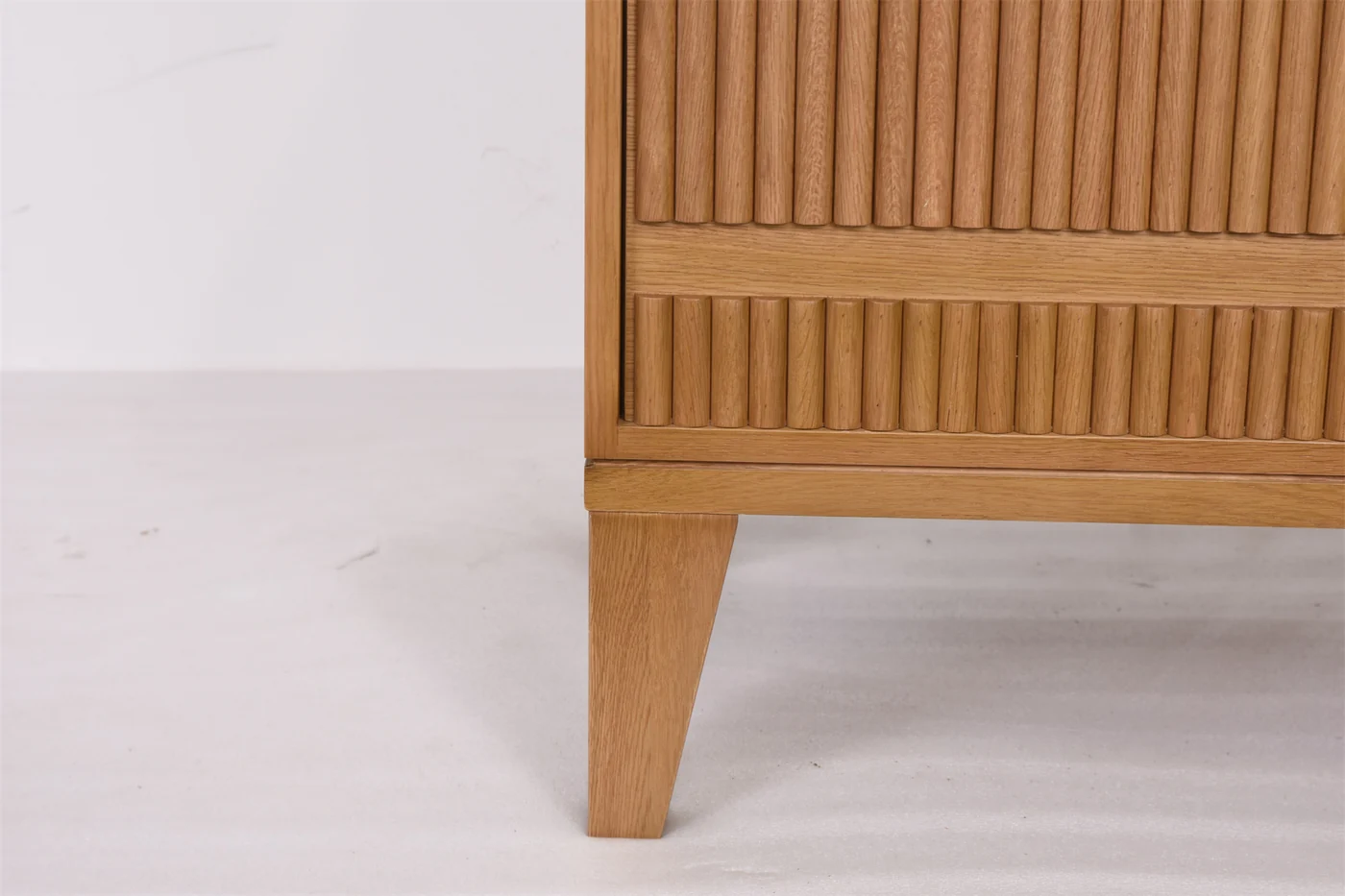
Wood-toned nightstand detail with leg, lower rail and floor clearance
Floor contact, cleaning access and lower-edge exposure belong in the item durability record.

Carry prototype decisions into repeatable production

A prototype can establish the control standard only when its decisions are recorded. Gainwell’s hotel furniture prototype review covers stability, joinery, hardware movement, material transitions, seams and repeated operation, then calls for a controlled approval record. For durability control, add one further question to every accepted comment: How will production and inspection verify that this condition remains the same?

Photograph the agreed detail, link it to the drawing and furniture code, identify the accepted sample or prototype revision, and define a measurable or observable inspection point. Then place that point at the relevant handover. Gainwell’s capabilities workflow separates incoming-material, in-process, final and pre-shipment controls. Assign the evidence where it can reveal a deviation early enough for correction.

For example, an approved seam path belongs in the upholstery work instruction and in-process check, not only in the final photograph. An edge build-up belongs in the drawing, material release and production checkpoint. A hardware function belongs in the prototype record and final functional inspection. Release evidence must travel with the revision.

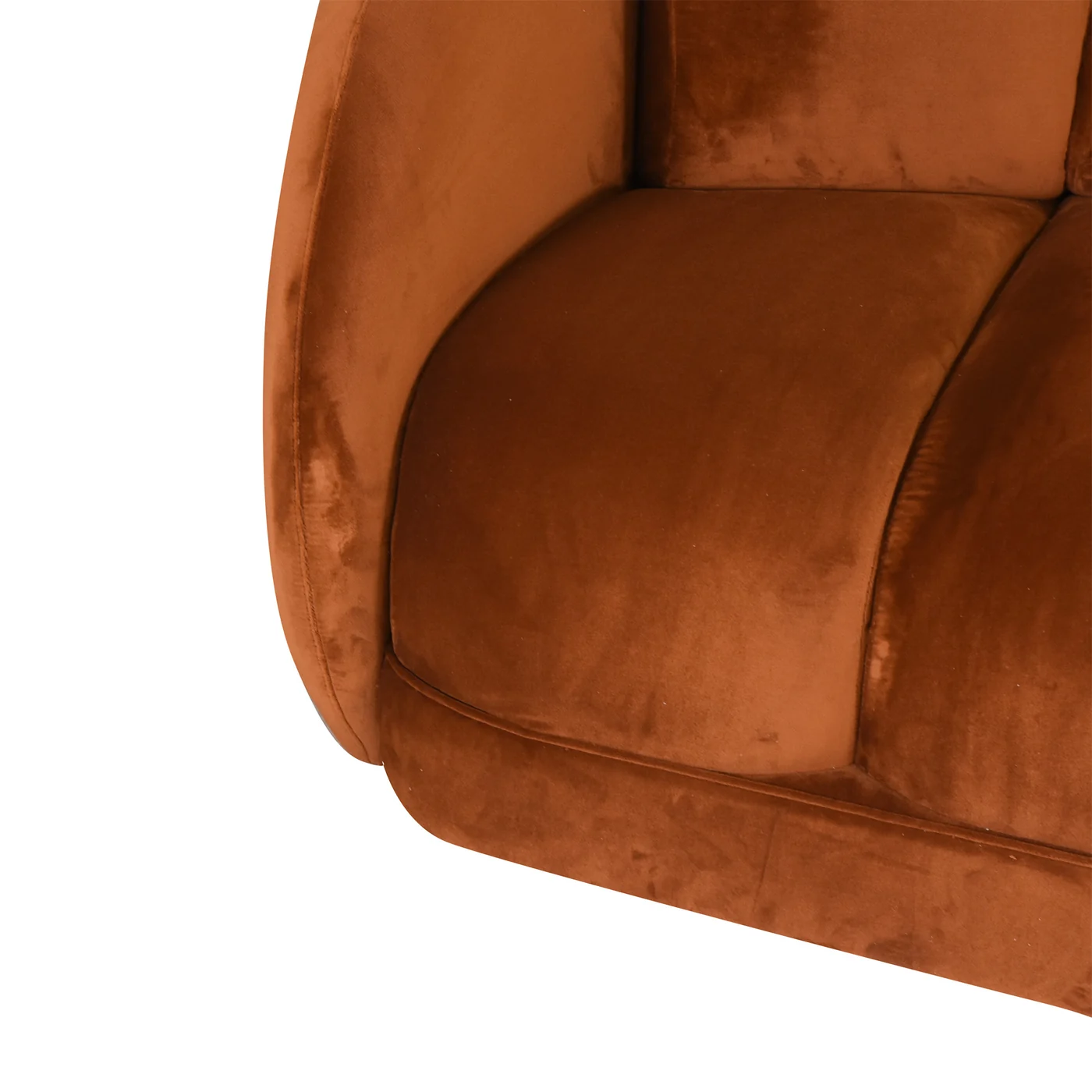
Orange upholstered sofa detail showing seat, back, curved arm and seams
The production record should control seam paths, cushion fit and cover transitions against the approved sample.
Furniture production workshop with automated machinery and stacked wood components
Production capability supports repeatability only when approved details and inspection records remain linked to the item revision.

Issue a durability evidence passport for each furniture code

Bring the scattered records into one compact passport. It can be a controlled schedule row or linked document; the point is that design, procurement, production and operations can find the same approval basis.

Passport field What to record
Identity and use Furniture code, room type or zone, quantity, revision, use condition and responsible parties
Failure-mode register Component, plausible failure, design response, evidence owner and current status
Controlled definition Drawings, material and hardware schedules, seam or edge details, cleaner input and prototype reference
Evidence status Required project tests, sample results, inspection point, report location and unresolved limitation
Service route Access, adjustment, repair, replaceable component, spare reference and maintenance instruction
Decision RELEASE, CONDITIONAL or HOLD, approver, date, scope and exact closing condition

The passport is not a new warranty or certificate. It is a traceability tool. Its value comes from showing which evidence applies to which item and which uncertainty remains open.

Define change triggers and release only the supported revision

Set change triggers before production. A new material source, substrate, finish build-up, adhesive, seam, foam, hardware, edge, cleaner, production method, factory or required test status can invalidate part of the earlier evidence. Reopen only the affected rows, but do not assume that the old approval automatically covers the change.

Exact fire, structural, accessibility, environmental, electrical, chemical and material requirements vary by product, venue and jurisdiction. Confirm the live project’s standards, test methods, acceptance criteria, certificates, samples, drawings and commercial terms. Website guidance and photographs cannot replace those records.

Return operational findings to the same record

Durability control should not end at delivery. During installation, snagging and early operation, record the item code, location, symptom, component and corrective action. A repeated issue across rooms is more useful when it can be traced to the same edge detail, hardware source, seam or cleaning routine. Feed that finding into the passport before a replenishment or later phase repeats the condition.

When the use-condition map, failure-mode register and open evidence are ready, share the room types, furniture schedule, drawings, cleaning inputs, destination market and required tests through the Gainwell project enquiry. That gives the technical review a defined starting point without turning “durable” into an unsupported promise.

Frequently Asked Questions

What makes hotel furniture durable?

Durability comes from the complete item matching its use condition: frame and joinery, surfaces and edges, hardware, upholstery, site interfaces, cleaning routine and service route. The project must define likely failure modes and carry approved evidence from drawings and samples into production checks. No material label proves the assembled result by itself.

What durability evidence should a hotel furniture specification include?

Include the furniture code and zone, use conditions, controlled drawings, material and hardware schedules, edge and seam details, cleaning inputs, prototype revision, required tests, inspection points, service access and release status. Each open issue needs an owner, evidence location and closing condition. Requirements should match the exact product and destination market.

How should buyers evaluate durable upholstery fabrics for high-traffic hotel furniture?

Evaluate the upholstery system, not only the cover. Connect the proposed fabric or leather to the seat form, seams, backing, foam or cushion, attachment, high-contact zones, cleaning products, replaceable parts and project-required performance evidence. Confirm that test documents apply to the exact material and that the full-form sample remains the production reference.

Is a “contract-grade” label enough to prove durability?

No. It can signal intended commercial use, but the project still needs item-specific construction, material, hardware, prototype, test and inspection evidence. Ask what the label means for the exact revision, which requirement it addresses and which record supports it. If those links are missing, treat the claim as unverified.

How should prototype durability evidence be carried into production?

Convert each accepted prototype detail into a controlled drawing, sample reference or work instruction, then assign an incoming, in-process or final checkpoint. Record findings against the furniture code and revision. If a source, seam, edge, hardware item, cleaner or method changes, reopen the affected approval before release.

Can hotel furniture lifespan be predicted from the material alone?

No reliable project lifespan can be inferred from a material name alone. Use intensity, construction, interfaces, cleaning, maintenance, environment, repairability, production consistency and installation all matter. Instead of publishing a universal number, define the required project evidence, monitor actual operating findings and keep warranty or service-life terms in the current commercial agreement.