MDF vs. Plywood vs. Marine Grade: Choosing the Right Core for Hotel Furniture
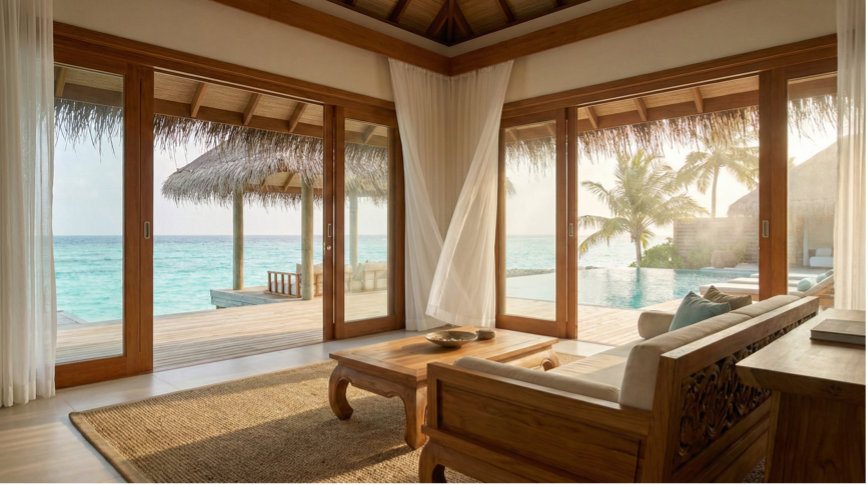
In hospitality design, aesthetics often take center stage. Yet, for tropical resort furniture or coastal properties, the true measure of quality lies beneath the finish.
Moisture is the silent enemy of furniture longevity. In high-humidity climates, invisible moisture ingress leads to swelling, delamination, and mold—failures that can ruin a luxury fit-out within months.
At Gainwell, we believe a stunning veneer is useless if the substrate fails. With over 30 years of experience, we know that maximizing ROI isn’t about buying the most expensive material; it is about engineering the right core for the right zone. This guide compares the contenders—MDF, HMR, Plywood, and Marine Grade—to help you make the right choice.
The Contenders: Comparing Common Core Materials
To specify luxury marine-grade furniture or durable hotel casegoods, you must understand the technical properties of the substrate. Here is how the most common materials stack up against humidity.
- MDF (Medium Density Fiberboard)
MDF is an engineered wood product made by breaking down hardwood or softwood residuals into wood fibers, combining them with wax and a resin binder, and forming panels by applying high temperature and pressure.
- Pros: It offers an incredibly smooth surface, making it the ideal substrate for high-gloss paints and thin veneers. It is cost-effective and has consistent density with no knots.
- Cons: Standard MDF acts like a sponge. When exposed to water, the fibers swell, and the material expands. Once swollen, it does not shrink back to its original shape, leading to cracked paint and peeling veneers.
- Verdict: Excellent for “Zone A” dry areas (headboards, TV wall panels) but dangerous for wet zones.
- HMR / MR MDF (Moisture Resistant)
Often recognized by the green dye added to its core during manufacturing, HMR (High Moisture Resistance) MDF utilizes a special resin formula (often Melamine Urea Formaldehyde) that improves its resistance to intermittent humidity.
- The Difference: While standard MDF swells rapidly upon contact with moisture, HMR slows this process significantly.
- Verdict: A smart middle-ground for areas with ambient humidity (like a mini-bar area) but still not suitable for direct water contact or standing water.
- Plywood (Multi-layered)
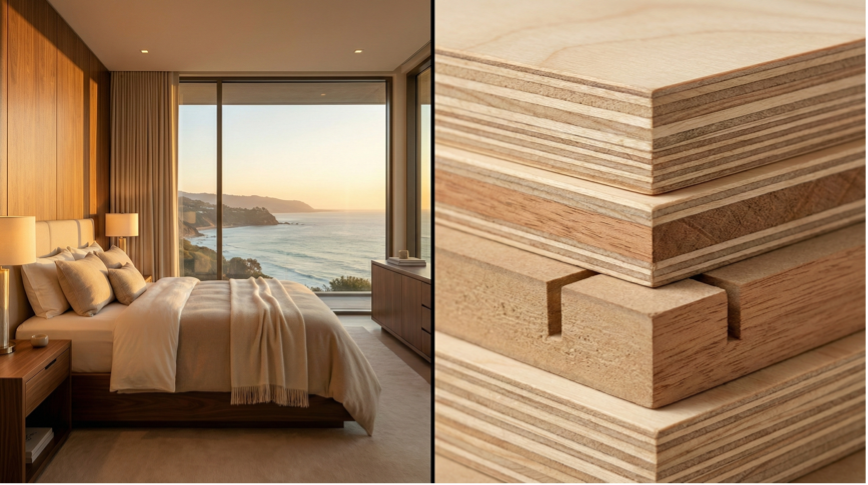
Plywood is constructed from thin layers of wood veneer (plies) glued together with adjacent layers having their wood grain rotated up to 90 degrees to one another.
- Pros: This cross-graining technique reduces the tendency of wood to split and provides exceptional structural integrity. It holds screws much better than MDF, which is vital for furniture doors that are opened and closed thousands of times.
- Cons: It is more expensive than MDF and has a rougher edge that requires careful banding.
- Verdict: The industry standard for high-traffic areas and weight-bearing furniture.
- Marine Plywood (The Gold Standard)
This is where the term “marine furniture” truly applies. True marine-grade plywood is not just “water-resistant”; it is built to survive.
- The Secret is in the Glue: The defining feature of marine plywood is the use of WBP (Weather and Boil Proof) glue, typically a phenolic resin. This glue is tested to withstand boiling water for hours without delaminating. Furthermore, marine plywood is void-free, preventing water from getting trapped inside the layers.
- Verdict: Mandatory for bathroom vanities, under-sink cabinets, and outdoor furniture in coastal regions.
Application Guide: Which Board Goes Where?
Smart value engineering means spending your budget where it protects the asset and saving it where the risk is low. Based on Gainwell’s global project data, here is our recommended application guide for marine grade plywood uses versus standard options.
Zone A: The Bedroom (Dry Zone)
- Furniture: Headboards, Bed Bases, Writing Desks, Wardrobes (away from AC vents).
- Recommendation: Standard MDF or Particle Board.
- Why: These areas rarely see liquid water. Using MDF here provides the smoothest finish for veneers and lacquers while keeping the project budget under control.
Zone B: The Mini-Bar (Damp Zone)
- Furniture: Mini-bar cabinets, Fridge housing, Coffee stations.
- Recommendation: HMR (Moisture Resistant) MDF.
- Why: Refrigerators generate condensation, and guests often spill coffee or water. HMR provides the necessary buffer against this ambient moisture without the high cost of marine ply.
Zone C: The Bathroom / Vanity (Wet Zone)
- Furniture: Vanity counters, under-sink storage, towel shelves.
- Recommendation: Marine Plywood (Non-negotiable).
- Why: This is a high-risk zone. Steam from showers and splashing from sinks will destroy standard boards. Using luxury marine-grade furniture substrates here ensures that expensive stone countertops don’t crack due to the cabinet below swelling.
Zone D: Public Areas / Lobby (High Impact)
- Furniture: Reception desks, Concierge stands, Bellboy carts.
- Recommendation: Structural Plywood.
- Why: While moisture might be less of an issue, physical impact is high. Luggage collisions and constant use require the superior screw-holding power and shear strength of plywood.
How Gainwell Ensures "Climate-Ready" Furniture
At Gainwell, we don’t just manufacture to a drawing; we manufacture to an environment. We understand that furniture destined for a dry climate like Las Vegas requires different engineering than furniture for a humid resort in Bali or the Caribbean.
- Custom Engineering & Location Analysis
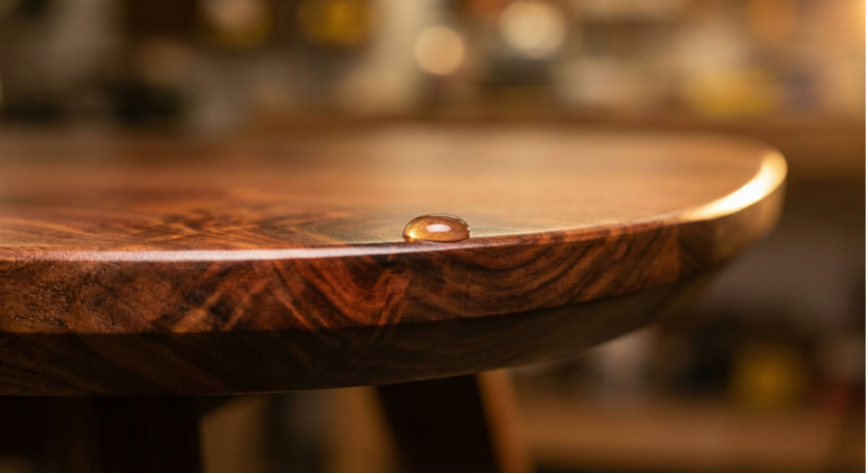
Before production begins, Gainwell’s engineering team analyzes the climatic conditions of your hotel’s location. For tropical resort furniture projects, we adjust the Moisture Content (MC) equilibrium of the wood during the drying process to prevent warping when the furniture arrives at the destination.
- Advanced Edge Banding Technology (PUR vs. EVA)
The board is only as good as its seal. If the edge tape peels, moisture enters the core.
- Standard Practice: Many manufacturers use EVA (Ethylene Vinyl Acetate) glue, which can reactivate and peel in high heat.
- The Gainwell Standard: For high-humidity projects, we utilize PUR (Polyurethane) adhesive for edge banding. PUR creates a chemical bond that is significantly more resistant to heat and moisture, effectively sealing the core against the elements.
- Vertical Integration
From our own lumber processing to metalwork and upholstery, Gainwell controls the entire supply chain. This allows us to verify that the plywood labeled “Marine Grade” actually contains the WBP glue and hardwood layers specified, rather than relying on third-party vendors.
Conclusion
The “invisible architecture” of your furniture—the core material—dictates its lifespan. While it is tempting to cut costs by using standard MDF throughout a project, the long-term cost of replacing water-damaged vanity units far outweighs the initial savings.
However, you do not need to overspend. The smartest approach is a hybrid one:
- Don’t pay for Marine Grade in a dry bedroom.
- Don’t risk standard MDF in a bathroom.
- Do rely on engineered solutions for the zones in between.
Not sure which material fits your project budget? Don’t leave your assets vulnerable to the climate. Contact Gainwell with your floor plan and specifications today for a complimentary material consultation. Let us help you value-engineer your project for both luxury and longevity.