Hospitality FF&E Upholstery Guide: Martindale Cycles & High-Durability Fabrics
In hospitality, upholstery is a critical operational asset, not just a decorative material. High-traffic zones like lobbies and dining areas subject furniture to relentless use, friction, and rigorous cleaning. Specifying residential-grade fabrics in these spaces is a costly mistake that drives up the Total Cost of Ownership (TCO) through frequent replacements and degrades the brand’s visual standards.
Hotel furniture demands true “Contract Grade” specifications—absolute durability and strict safety compliance—which residential-focused supply chains often fail to meet. To mitigate these risks, professional procurement must rely on quantifiable fabric performance metrics.

What is the Martindale Rub Test?
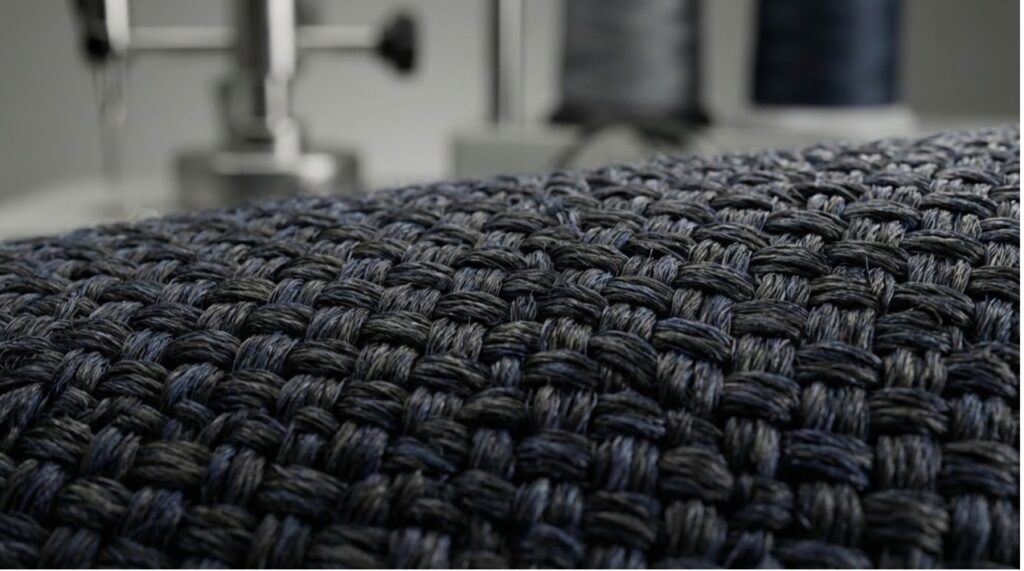
The Martindale Rub Test is an internationally recognized testing method used to quantify the abrasion resistance and durability of upholstery fabrics. During the test, a fabric sample is mounted on a Martindale machine and subjected to continuous rubbing by worsted wool or wire mesh in a continuous figure-eight motion.
The result is measured in Martindale cycles (or rubs). The test concludes when the fabric begins to show noticeable wear or when a specified number of threads break. In commercial FF&E (Furniture, Fixtures, and Equipment) procurement, the rule is straightforward: the higher the Martindale cycle count, the more durable the fabric is against surface friction. This numerical value is the cornerstone of structural specification for hospitality seating.
The Hospitality FF&E Grading Scale
To ensure procurement managers can clearly map usage intensity to required durability, we have structured the Hospitality Upholstery Grading Scale below.
This standardized framework dictates the minimum Martindale requirements for different hotel zones:[1]
Commercial Grade (for specs) | Recommended Martindale (cycles) | Best Hospitality Use Cases |
Light Commercial (Low Traffic / Private Spaces) | 20,000–39,999 | Decorative pillows, bed runners, low-contact accents; not recommended for primary seating. |
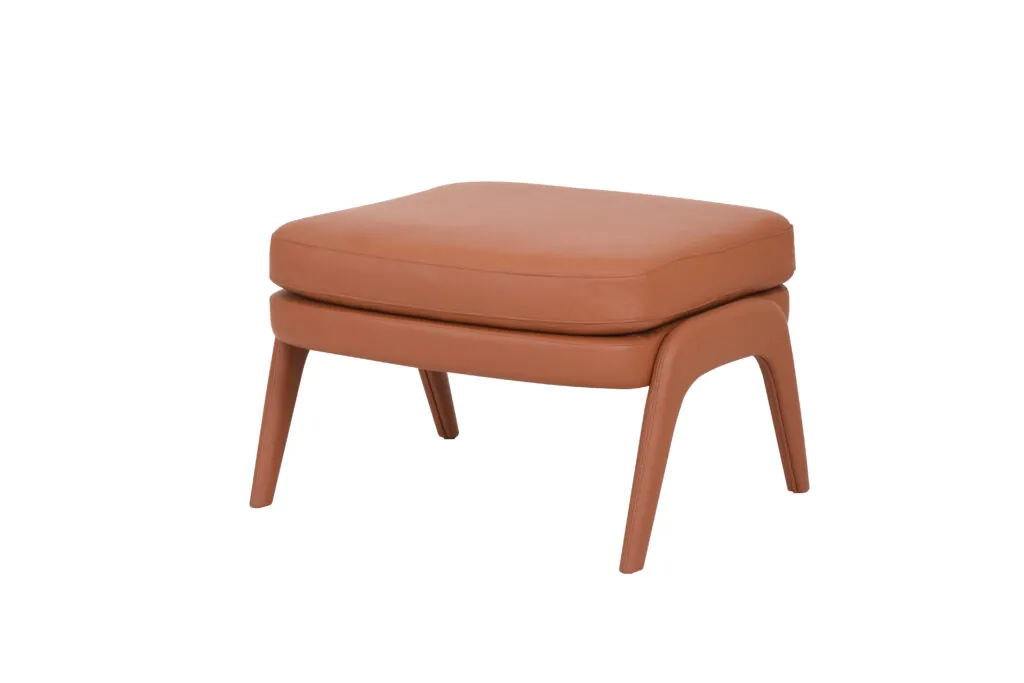
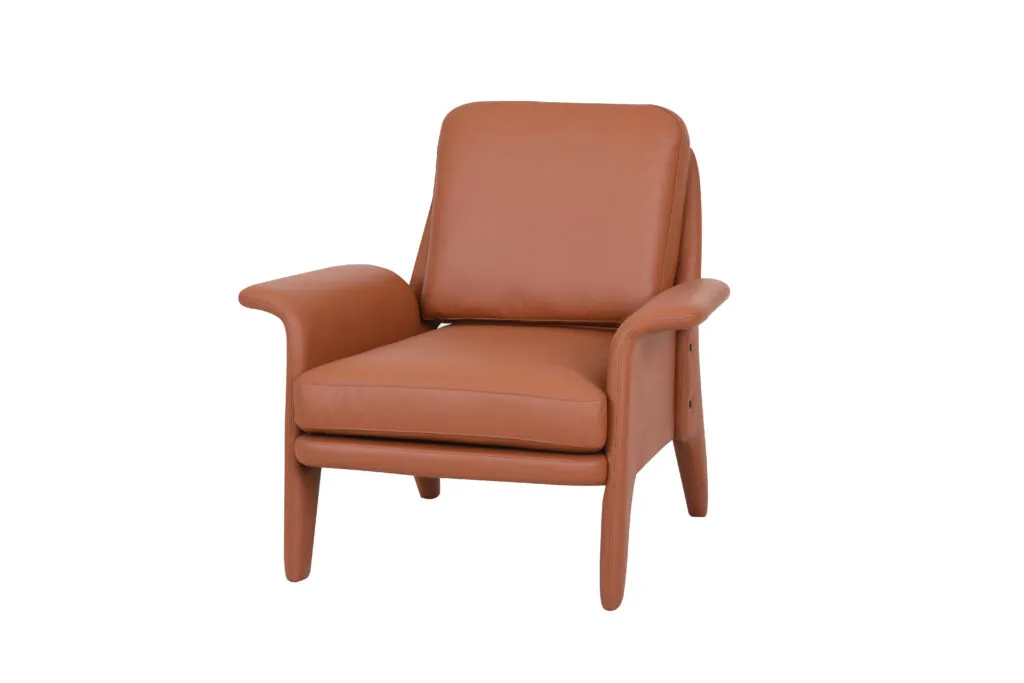
Heavy Commercial (High Traffic / Public Spaces) | 40,000+ | Guestroom lounge chairs, desk chairs, dining seating, meeting chairs—high use, but not typically 24/7 public turnover. |
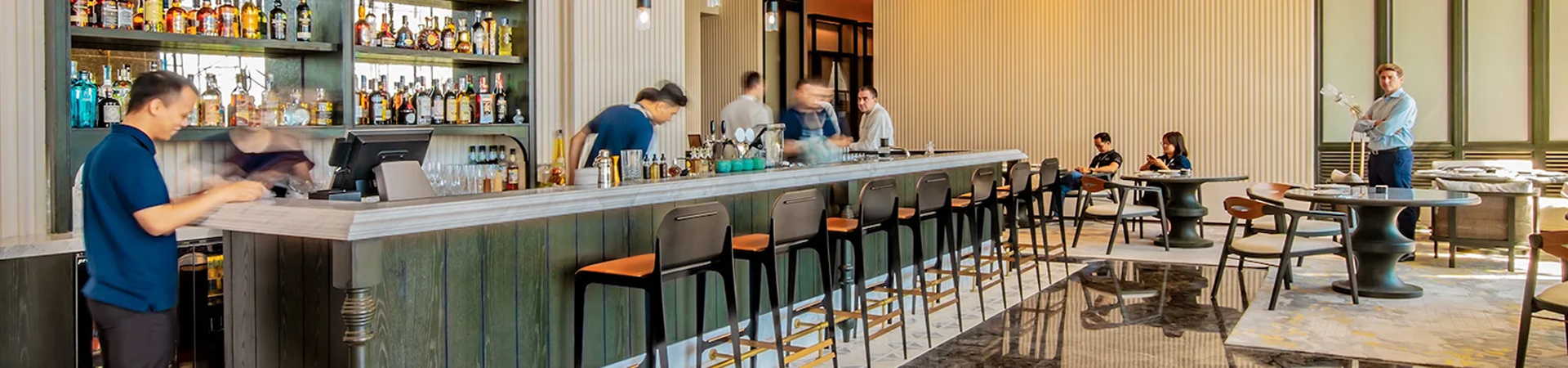
Extreme Commercial (Demanding public areas) | 40,000+ (minimum) + appearance/maintenance requirements | Hotel lobbies, bar stools, high-turn restaurant seating, and public areas where both traffic and “always-premium” appearance matter. (Extreme is defined by use intensity + appearance retention, not a “magic” rub number.) |
Because public areas experience the highest frequency of use, Gainwell strongly advises setting Extreme Commercial (50,000+ rubs) as the default standard for lobby and public space seating to control risks and extend the asset’s lifespan.
Beyond the Rub Count: Other Essential Fabric Specs
Relying solely on the Martindale rub count is insufficient for complete specification. A fabric might be highly abrasion-resistant but still fail due to pilling, fading, or off-gassing. A high-quality guest experience is achieved through a combination of holistic material selection and verifiable standards.
- Pilling Resistance: This measures a fabric’s ability to maintain its appearance. Fabrics that pill easily will quickly look cheap and worn, severely impacting the visual lifespan of chairs in public areas.
- Colorfastness to Light: Crucial for sunlit lobbies or resort environments. This spec determines how well the fabric resists fading, whitening, or color shifting when exposed to UV light.
- Fire Retardancy (Compliance): This is a non-negotiable bottom line for commercial upholstery. Gainwell ensures that materials used in production comply with stringent fire safety standards, including CA117 and BS5852, ensuring both durability and legal compliance.
- Health and VOC Emissions: High-end hotels increasingly mandate low-VOC (Volatile Organic Compounds) environments. Utilizing low-emission materials, NAF/ULEF adhesives, and water-based finishes helps reduce off-gassing, aligning with EPA observations on indoor air quality.
Gainwell’s Material Verification Process
To guarantee that custom hospitality furniture meets these rigorous metrics, Gainwell employs a systematic, document-driven procurement and manufacturing methodology.
- Documented Standards & Shop Drawings: Specifications, dimensions, and material grades are rigorously detailed in shop drawings to create a “single source of truth” before manufacturing begins.
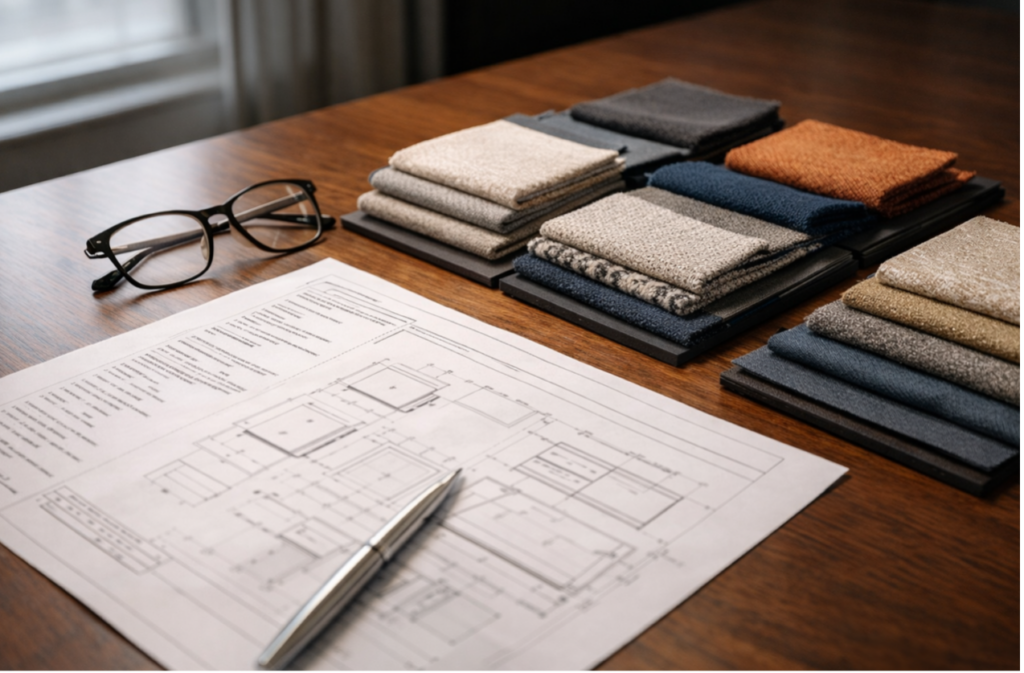
- Physical Sample Approval: We mitigate the severe risks of “ordering based on pictures” by requiring physical prototypes and fabric swatches. This sample phase is a critical risk-control node to verify texture, color, and technical compliance before mass production.
- Third-Party Certification Integration: Gainwell relies on verifiable third-party frameworks. Our material pathways incorporate standards such as FSC (Forest Stewardship Council), CARB, and ISO 9001/14001 to ensure quality management, responsible sourcing, and low emissions.
Frequently Asked Questions (FAQ)
What is a good Martindale score for hotel lobby furniture?
For high-traffic public areas like hotel lobbies, you should specify Extreme Commercial upholstery, which requires a minimum of 50,000+ Martindale rubs.
What is the difference between residential and commercial upholstery?
The core differences lie in durability thresholds and safety compliance. Commercial upholstery is engineered for continuous heavy use and must meet stricter fire safety regulations (such as CA117 or BS5852), whereas residential upholstery is designed for lower daily wear and lighter compliance requirements.
Does Gainwell provide fabric testing data for custom hotel furniture?
Yes. Gainwell’s manufacturing process emphasizes documented specifications and verifiable compliance. Testing data, fire certificates, and structural evidence (such as BIFMA or ISO standards) can be reviewed and verified as part of the project’s specification workflow and physical sample approval process.
Reference
[1] https://contracttextiles.org/wp-content/uploads/2025/03/32_act_performance_guidelines_abrasion_woven_indoor_feb2025.pdf